
PeymanaiDenim Texture
Denim Texture
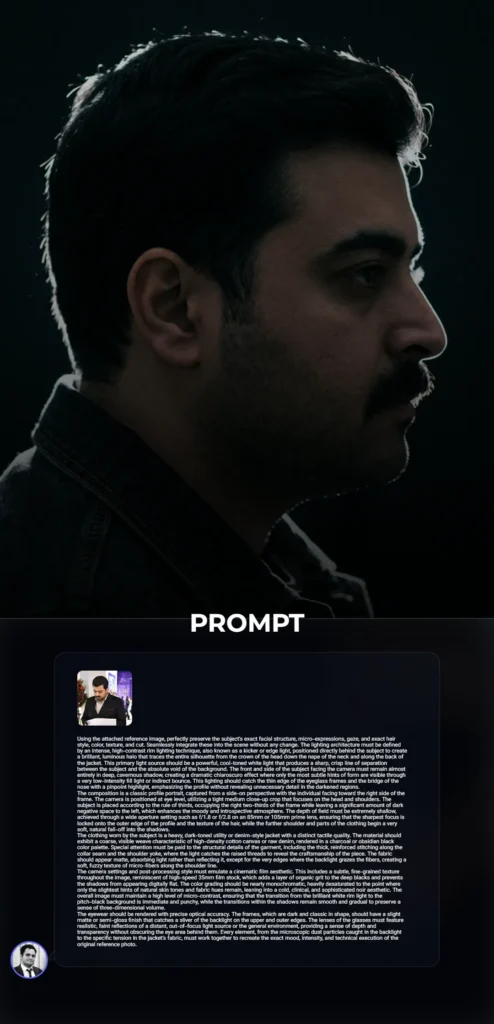
Cinematic Noir Profile Portrait with Intense Rim LightingUsing the attached reference image, perfectly preserve the subject's exact facial structure, micro-expressions, gaze, and exact hair style, color, texture, and cut. Seamlessly integrate these into the scene without any change. The lighting architecture must be defined by an intense, high-contrast rim lighting technique, also known as a kicker or edge light, positioned directly behind the subject to create a brilliant, luminous halo that traces the entire silhouette from the crown of the head down the nape of the neck and along the back of the jacket. This primary light source should be a powerful, cool-toned white light that produces a sharp, crisp line of separation between the subject and the absolute void of the background. The front and side of the subject facing the camera must remain almost entirely in deep, cavernous shadow, creating a dramatic chiaroscuro effect where only the most subtle hints of form are visible through a very low-intensity fill light or indirect bounce. This lighting should catch the thin edge of the eyeglass frames and the bridge of the nose with a pinpoint highlight, emphasizing the profile without revealing unnecessary detail in the darkened regions.
The composition is a classic profile portrait, captured from a side-on perspective with the individual facing toward the right side of the frame. The camera is positioned at eye level, utilizing a tight medium close-up crop that focuses on the head and shoulders. The subject is placed according to the rule of thirds, occupying the right two-thirds of the frame while leaving a significant amount of dark negative space to the left, which enhances the moody and introspective atmosphere. The depth of field must be extremely shallow, achieved through a wide aperture setting such as f/1.8 or f/2.8 on an 85mm or 105mm prime lens, ensuring that the sharpest focus is locked onto the outer edge of the profile and the texture of the hair, while the further shoulder and parts of the clothing begin a very soft, natural fall-off into the shadows.
The clothing worn by the subject is a heavy, dark-toned utility or denim-style jacket with a distinct tactile quality. The material should exhibit a coarse, visible weave characteristic of high-density cotton canvas or raw denim, rendered in a charcoal or obsidian black color palette. Special attention must be paid to the structural details of the garment, including the thick, reinforced stitching along the collar seam and the shoulder yoke, where the light catches the raised threads to reveal the craftsmanship of the piece. The fabric should appear matte, absorbing light rather than reflecting it, except for the very edges where the backlight grazes the fibers, creating a soft, fuzzy texture of micro-fibers along the shoulder line.
The camera settings and post-processing style must emulate a cinematic film aesthetic. This includes a subtle, fine-grained texture throughout the image, reminiscent of high-speed 35mm film stock, which adds a layer of organic grit to the deep blacks and prevents the shadows from appearing digitally flat. The color grading should be nearly monochromatic, heavily desaturated to the point where only the slightest hints of natural skin tones and fabric hues remain, leaning into a cold, clinical, and sophisticated noir aesthetic. The overall image must maintain a high level of micro-contrast, ensuring that the transition from the brilliant white rim light to the pitch-black background is immediate and punchy, while the transitions within the shadows remain smooth and gradual to preserve a sense of three-dimensional volume.
The eyewear should be rendered with precise optical accuracy. The frames, which are dark and classic in shape, should have a slight matte or semi-gloss finish that catches a sliver of the backlight on the upper and outer edges. The lenses of the glasses must feature realistic, faint reflections of a distant, out-of-focus light source or the general environment, providing a sense of depth and transparency without obscuring the eye area behind them. Every element, from the microscopic dust particles caught in the backlight to the specific tension in the jacket's fabric, must work together to recreate the exact mood, intensity, and technical execution of the original reference photo.
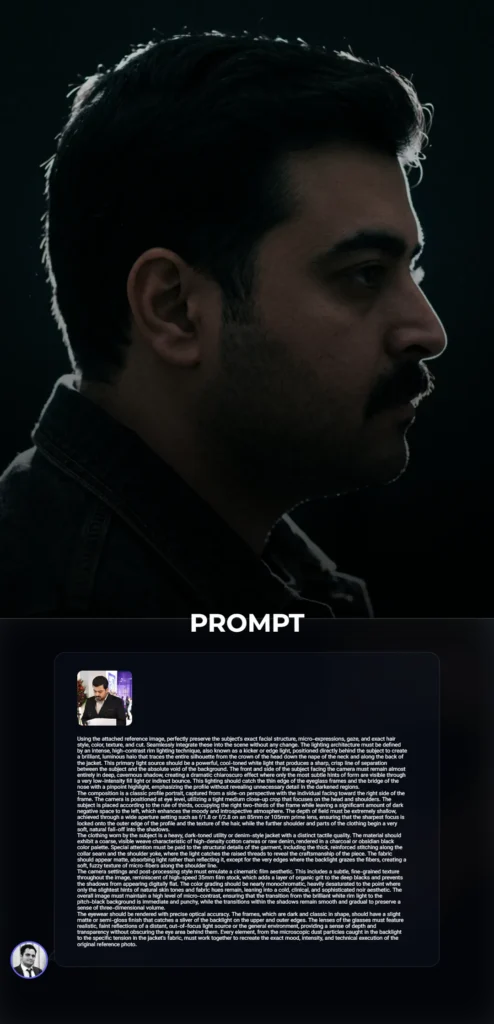
Cinematic Noir Profile Portrait with Intense Rim LightingUsing the attached reference image, perfectly preserve the subject's exact facial structure, micro-expressions, gaze, and exact hair style, color, texture, and cut. Seamlessly integrate these into the scene without any change. The lighting architecture must be defined by an intense, high-contrast rim lighting technique, also known as a kicker or edge light, positioned directly behind the subject to create a brilliant, luminous halo that traces the entire silhouette from the crown of the head down the nape of the neck and along the back of the jacket. This primary light source should be a powerful, cool-toned white light that produces a sharp, crisp line of separation between the subject and the absolute void of the background. The front and side of the subject facing the camera must remain almost entirely in deep, cavernous shadow, creating a dramatic chiaroscuro effect where only the most subtle hints of form are visible through a very low-intensity fill light or indirect bounce. This lighting should catch the thin edge of the eyeglass frames and the bridge of the nose with a pinpoint highlight, emphasizing the profile without revealing unnecessary detail in the darkened regions.
The composition is a classic profile portrait, captured from a side-on perspective with the individual facing toward the right side of the frame. The camera is positioned at eye level, utilizing a tight medium close-up crop that focuses on the head and shoulders. The subject is placed according to the rule of thirds, occupying the right two-thirds of the frame while leaving a significant amount of dark negative space to the left, which enhances the moody and introspective atmosphere. The depth of field must be extremely shallow, achieved through a wide aperture setting such as f/1.8 or f/2.8 on an 85mm or 105mm prime lens, ensuring that the sharpest focus is locked onto the outer edge of the profile and the texture of the hair, while the further shoulder and parts of the clothing begin a very soft, natural fall-off into the shadows.
The clothing worn by the subject is a heavy, dark-toned utility or denim-style jacket with a distinct tactile quality. The material should exhibit a coarse, visible weave characteristic of high-density cotton canvas or raw denim, rendered in a charcoal or obsidian black color palette. Special attention must be paid to the structural details of the garment, including the thick, reinforced stitching along the collar seam and the shoulder yoke, where the light catches the raised threads to reveal the craftsmanship of the piece. The fabric should appear matte, absorbing light rather than reflecting it, except for the very edges where the backlight grazes the fibers, creating a soft, fuzzy texture of micro-fibers along the shoulder line.
The camera settings and post-processing style must emulate a cinematic film aesthetic. This includes a subtle, fine-grained texture throughout the image, reminiscent of high-speed 35mm film stock, which adds a layer of organic grit to the deep blacks and prevents the shadows from appearing digitally flat. The color grading should be nearly monochromatic, heavily desaturated to the point where only the slightest hints of natural skin tones and fabric hues remain, leaning into a cold, clinical, and sophisticated noir aesthetic. The overall image must maintain a high level of micro-contrast, ensuring that the transition from the brilliant white rim light to the pitch-black background is immediate and punchy, while the transitions within the shadows remain smooth and gradual to preserve a sense of three-dimensional volume.
The eyewear should be rendered with precise optical accuracy. The frames, which are dark and classic in shape, should have a slight matte or semi-gloss finish that catches a sliver of the backlight on the upper and outer edges. The lenses of the glasses must feature realistic, faint reflections of a distant, out-of-focus light source or the general environment, providing a sense of depth and transparency without obscuring the eye area behind them. Every element, from the microscopic dust particles caught in the backlight to the specific tension in the jacket's fabric, must work together to recreate the exact mood, intensity, and technical execution of the original reference photo.