
PeymanaiIntrospective
Introspective

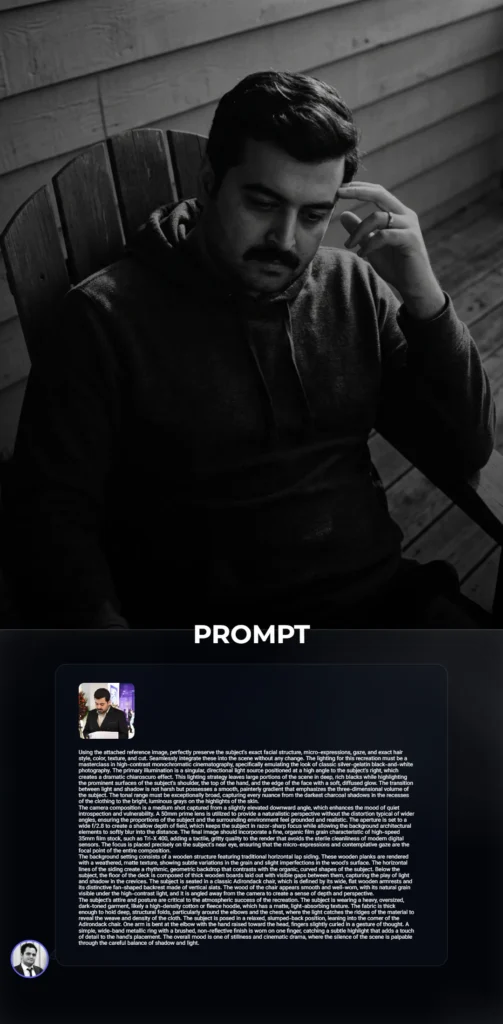
Cinematic Chiaroscuro Monochromatic Portrait with Silver-Gelatin AestheticsUsing the attached reference image, perfectly preserve the subject's exact facial structure, micro-expressions, gaze, and exact hair style, color, texture, and cut. Seamlessly integrate these into the scene without any change. The lighting for this recreation must be a masterclass in high-contrast monochromatic cinematography, specifically emulating the look of classic silver-gelatin black-and-white photography. The primary illumination is a singular, directional light source positioned at a high angle to the subject's right, which creates a dramatic chiaroscuro effect. This lighting strategy leaves large portions of the scene in deep, rich blacks while highlighting the prominent surfaces of the subject's shoulder, the top of the hand, and the edge of the face with a soft, diffused glow. The transition between light and shadow is not harsh but possesses a smooth, painterly gradient that emphasizes the three-dimensional volume of the subject. The tonal range must be exceptionally broad, capturing every nuance from the darkest charcoal shadows in the recesses of the clothing to the bright, luminous grays on the highlights of the skin.
The camera composition is a medium shot captured from a slightly elevated downward angle, which enhances the mood of quiet introspection and vulnerability. A 50mm prime lens is utilized to provide a naturalistic perspective without the distortion typical of wider angles, ensuring the proportions of the subject and the surrounding environment feel grounded and realistic. The aperture is set to a wide f/2.8 to create a shallow depth of field, which keeps the subject in razor-sharp focus while allowing the background architectural elements to softly blur into the distance. The final image should incorporate a fine, organic film grain characteristic of high-speed 35mm film stock, such as Tri-X 400, adding a tactile, gritty quality to the render that avoids the sterile cleanliness of modern digital sensors. The focus is placed precisely on the subject's near eye, ensuring that the micro-expressions and contemplative gaze are the focal point of the entire composition.
The background setting consists of a wooden structure featuring traditional horizontal lap siding. These wooden planks are rendered with a weathered, matte texture, showing subtle variations in the grain and slight imperfections in the wood's surface. The horizontal lines of the siding create a rhythmic, geometric backdrop that contrasts with the organic, curved shapes of the subject. Below the subject, the floor of the deck is composed of thick wooden boards laid out with visible gaps between them, capturing the play of light and shadow in the crevices. The subject is seated in a classic Adirondack chair, which is defined by its wide, flat wooden armrests and its distinctive fan-shaped backrest made of vertical slats. The wood of the chair appears smooth and well-worn, with its natural grain visible under the high-contrast light, and it is angled away from the camera to create a sense of depth and perspective.
The subject's attire and posture are critical to the atmospheric success of the recreation. The subject is wearing a heavy, oversized, dark-toned garment, likely a high-density cotton or fleece hoodie, which has a matte, light-absorbing texture. The fabric is thick enough to hold deep, structural folds, particularly around the elbows and the chest, where the light catches the ridges of the material to reveal the weave and density of the cloth. The subject is posed in a relaxed, slumped-back position, leaning into the corner of the Adirondack chair. One arm is bent at the elbow with the hand raised toward the head, fingers slightly curled in a gesture of thought. A simple, wide-band metallic ring with a brushed, non-reflective finish is worn on one finger, catching a subtle highlight that adds a touch of detail to the hand's placement. The overall mood is one of stillness and cinematic drama, where the silence of the scene is palpable through the careful balance of shadow and light.
Cinematic Chiaroscuro Monochromatic Portrait with Silver-Gelatin AestheticsUsing the attached reference image, perfectly preserve the subject's exact facial structure, micro-expressions, gaze, and exact hair style, color, texture, and cut. Seamlessly integrate these into the scene without any change. The lighting for this recreation must be a masterclass in high-contrast monochromatic cinematography, specifically emulating the look of classic silver-gelatin black-and-white photography. The primary illumination is a singular, directional light source positioned at a high angle to the subject's right, which creates a dramatic chiaroscuro effect. This lighting strategy leaves large portions of the scene in deep, rich blacks while highlighting the prominent surfaces of the subject's shoulder, the top of the hand, and the edge of the face with a soft, diffused glow. The transition between light and shadow is not harsh but possesses a smooth, painterly gradient that emphasizes the three-dimensional volume of the subject. The tonal range must be exceptionally broad, capturing every nuance from the darkest charcoal shadows in the recesses of the clothing to the bright, luminous grays on the highlights of the skin.
The camera composition is a medium shot captured from a slightly elevated downward angle, which enhances the mood of quiet introspection and vulnerability. A 50mm prime lens is utilized to provide a naturalistic perspective without the distortion typical of wider angles, ensuring the proportions of the subject and the surrounding environment feel grounded and realistic. The aperture is set to a wide f/2.8 to create a shallow depth of field, which keeps the subject in razor-sharp focus while allowing the background architectural elements to softly blur into the distance. The final image should incorporate a fine, organic film grain characteristic of high-speed 35mm film stock, such as Tri-X 400, adding a tactile, gritty quality to the render that avoids the sterile cleanliness of modern digital sensors. The focus is placed precisely on the subject's near eye, ensuring that the micro-expressions and contemplative gaze are the focal point of the entire composition.
The background setting consists of a wooden structure featuring traditional horizontal lap siding. These wooden planks are rendered with a weathered, matte texture, showing subtle variations in the grain and slight imperfections in the wood's surface. The horizontal lines of the siding create a rhythmic, geometric backdrop that contrasts with the organic, curved shapes of the subject. Below the subject, the floor of the deck is composed of thick wooden boards laid out with visible gaps between them, capturing the play of light and shadow in the crevices. The subject is seated in a classic Adirondack chair, which is defined by its wide, flat wooden armrests and its distinctive fan-shaped backrest made of vertical slats. The wood of the chair appears smooth and well-worn, with its natural grain visible under the high-contrast light, and it is angled away from the camera to create a sense of depth and perspective.
The subject's attire and posture are critical to the atmospheric success of the recreation. The subject is wearing a heavy, oversized, dark-toned garment, likely a high-density cotton or fleece hoodie, which has a matte, light-absorbing texture. The fabric is thick enough to hold deep, structural folds, particularly around the elbows and the chest, where the light catches the ridges of the material to reveal the weave and density of the cloth. The subject is posed in a relaxed, slumped-back position, leaning into the corner of the Adirondack chair. One arm is bent at the elbow with the hand raised toward the head, fingers slightly curled in a gesture of thought. A simple, wide-band metallic ring with a brushed, non-reflective finish is worn on one finger, catching a subtle highlight that adds a touch of detail to the hand's placement. The overall mood is one of stillness and cinematic drama, where the silence of the scene is palpable through the careful balance of shadow and light.