PeymanaiMinimalism
Minimalism

Professional High-Contrast Black and White Minimalist Editorial PortraitUsing the attached reference image, perfectly preserve the subject's exact facial structure, micro-expressions, gaze, and exact hair style, color, texture, and cut. Seamlessly integrate these into the scene without any change. The overall image must be a masterclass in monochromatic photography, utilizing a high-contrast black and white color palette that emphasizes deep blacks, brilliant whites, and a smooth range of intermediate gray tones. The lighting is the most critical atmospheric component, featuring a high-key, backlit arrangement where the background is intentionally overexposed to a luminous, clean white. This creates a powerful rim lighting effect that traces the silhouette of the individual, highlighting the texture of the skin and the edges of the clothing with a sharp, bright glow. The light source appears to be broad and diffused, originating from the upper right and slightly behind the subject, casting soft yet defined shadows that provide a sense of three-dimensional depth and volume to the torso and arms.
The camera settings are designed for a professional editorial portrait, utilizing a medium focal length of approximately 85mm to provide a slight compression of features and a flattering perspective. The aperture is set wide, likely at f/1.8 or f/2.0, creating a very shallow depth of field that ensures the subject is in razor-sharp focus while the background and parts of the chair dissolve into a soft, creamy bokeh. The composition is a medium shot, framing the individual from the mid-thigh upward, centered within the frame to emphasize the geometric symmetry of the chair and the subject's pose. The digital sensor or film stock emulation used should produce a very fine, almost imperceptible grain, maintaining a crisp and modern aesthetic while honoring the classic traditions of black and white film photography.
The individual is seated in a contemporary, minimalist wire-grid chair, which is a focal point of the layout. The chair is constructed from a dense network of thin, polished metal rods that intersect to form a diamond-patterned mesh, creating a complex interplay of light and shadow across its curved surface. The subject's pose is pensive and relaxed; the right arm is bent at the elbow with the hand brought up toward the mouth, while the left arm rests naturally across the lap. On the inner right forearm, a specific tattoo is visible, consisting of a single, thin, straight horizontal line that leads into the word passion written in a small, elegant, lowercase serif typeface. The left forearm is adorned with two thin, parallel band tattoos that encircle the wrist area. A simple, thin, metallic silver cuff bracelet is worn on the left wrist, and a delicate, fine-link chain is visible around the neck, partially tucked into the collar of the garment.
The textures in the image are rendered with extreme clarity. The subject wears a dark, long-sleeved v-neck sweater made of a dense, high-quality knit material, possibly a wool or cashmere blend. The weave of the fabric is visible under the directional light, showing subtle variations in the yarn and the way the fabric folds and bunches at the elbows and waist. The sleeves are slightly pulled up, revealing the forearms and the detailed texture of the skin. The lower garment consists of dark, matte-finish trousers that provide a deep, solid black base for the composition. The entire scene is set against a void of pure white light, removing all environmental context to focus entirely on the subject, the intricate textures of the clothing and furniture, and the sophisticated interplay of light and shadow. The final output must be an exact recreation of this specific arrangement, capturing the quiet, contemplative mood and the sharp, high-fashion aesthetic of the original photograph.
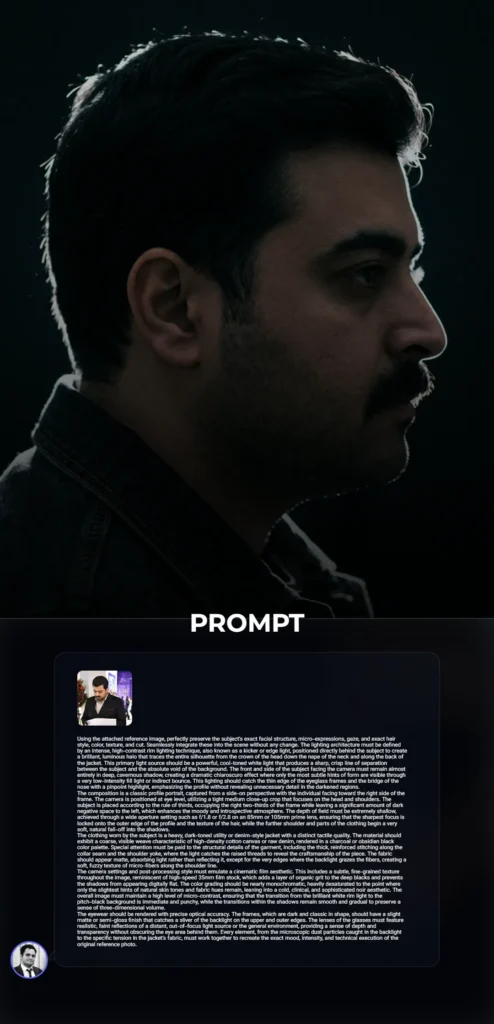
Cinematic Noir Profile Portrait with Intense Rim LightingUsing the attached reference image, perfectly preserve the subject's exact facial structure, micro-expressions, gaze, and exact hair style, color, texture, and cut. Seamlessly integrate these into the scene without any change. The lighting architecture must be defined by an intense, high-contrast rim lighting technique, also known as a kicker or edge light, positioned directly behind the subject to create a brilliant, luminous halo that traces the entire silhouette from the crown of the head down the nape of the neck and along the back of the jacket. This primary light source should be a powerful, cool-toned white light that produces a sharp, crisp line of separation between the subject and the absolute void of the background. The front and side of the subject facing the camera must remain almost entirely in deep, cavernous shadow, creating a dramatic chiaroscuro effect where only the most subtle hints of form are visible through a very low-intensity fill light or indirect bounce. This lighting should catch the thin edge of the eyeglass frames and the bridge of the nose with a pinpoint highlight, emphasizing the profile without revealing unnecessary detail in the darkened regions.
The composition is a classic profile portrait, captured from a side-on perspective with the individual facing toward the right side of the frame. The camera is positioned at eye level, utilizing a tight medium close-up crop that focuses on the head and shoulders. The subject is placed according to the rule of thirds, occupying the right two-thirds of the frame while leaving a significant amount of dark negative space to the left, which enhances the moody and introspective atmosphere. The depth of field must be extremely shallow, achieved through a wide aperture setting such as f/1.8 or f/2.8 on an 85mm or 105mm prime lens, ensuring that the sharpest focus is locked onto the outer edge of the profile and the texture of the hair, while the further shoulder and parts of the clothing begin a very soft, natural fall-off into the shadows.
The clothing worn by the subject is a heavy, dark-toned utility or denim-style jacket with a distinct tactile quality. The material should exhibit a coarse, visible weave characteristic of high-density cotton canvas or raw denim, rendered in a charcoal or obsidian black color palette. Special attention must be paid to the structural details of the garment, including the thick, reinforced stitching along the collar seam and the shoulder yoke, where the light catches the raised threads to reveal the craftsmanship of the piece. The fabric should appear matte, absorbing light rather than reflecting it, except for the very edges where the backlight grazes the fibers, creating a soft, fuzzy texture of micro-fibers along the shoulder line.
The camera settings and post-processing style must emulate a cinematic film aesthetic. This includes a subtle, fine-grained texture throughout the image, reminiscent of high-speed 35mm film stock, which adds a layer of organic grit to the deep blacks and prevents the shadows from appearing digitally flat. The color grading should be nearly monochromatic, heavily desaturated to the point where only the slightest hints of natural skin tones and fabric hues remain, leaning into a cold, clinical, and sophisticated noir aesthetic. The overall image must maintain a high level of micro-contrast, ensuring that the transition from the brilliant white rim light to the pitch-black background is immediate and punchy, while the transitions within the shadows remain smooth and gradual to preserve a sense of three-dimensional volume.
The eyewear should be rendered with precise optical accuracy. The frames, which are dark and classic in shape, should have a slight matte or semi-gloss finish that catches a sliver of the backlight on the upper and outer edges. The lenses of the glasses must feature realistic, faint reflections of a distant, out-of-focus light source or the general environment, providing a sense of depth and transparency without obscuring the eye area behind them. Every element, from the microscopic dust particles caught in the backlight to the specific tension in the jacket's fabric, must work together to recreate the exact mood, intensity, and technical execution of the original reference photo.
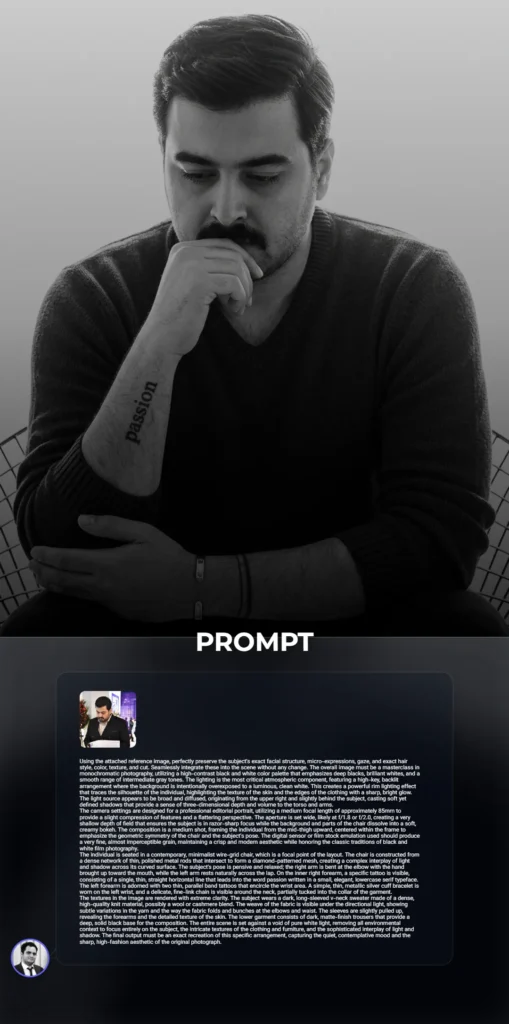
Professional High-Contrast Black and White Minimalist Editorial PortraitUsing the attached reference image, perfectly preserve the subject's exact facial structure, micro-expressions, gaze, and exact hair style, color, texture, and cut. Seamlessly integrate these into the scene without any change. The overall image must be a masterclass in monochromatic photography, utilizing a high-contrast black and white color palette that emphasizes deep blacks, brilliant whites, and a smooth range of intermediate gray tones. The lighting is the most critical atmospheric component, featuring a high-key, backlit arrangement where the background is intentionally overexposed to a luminous, clean white. This creates a powerful rim lighting effect that traces the silhouette of the individual, highlighting the texture of the skin and the edges of the clothing with a sharp, bright glow. The light source appears to be broad and diffused, originating from the upper right and slightly behind the subject, casting soft yet defined shadows that provide a sense of three-dimensional depth and volume to the torso and arms.
The camera settings are designed for a professional editorial portrait, utilizing a medium focal length of approximately 85mm to provide a slight compression of features and a flattering perspective. The aperture is set wide, likely at f/1.8 or f/2.0, creating a very shallow depth of field that ensures the subject is in razor-sharp focus while the background and parts of the chair dissolve into a soft, creamy bokeh. The composition is a medium shot, framing the individual from the mid-thigh upward, centered within the frame to emphasize the geometric symmetry of the chair and the subject's pose. The digital sensor or film stock emulation used should produce a very fine, almost imperceptible grain, maintaining a crisp and modern aesthetic while honoring the classic traditions of black and white film photography.
The individual is seated in a contemporary, minimalist wire-grid chair, which is a focal point of the layout. The chair is constructed from a dense network of thin, polished metal rods that intersect to form a diamond-patterned mesh, creating a complex interplay of light and shadow across its curved surface. The subject's pose is pensive and relaxed; the right arm is bent at the elbow with the hand brought up toward the mouth, while the left arm rests naturally across the lap. On the inner right forearm, a specific tattoo is visible, consisting of a single, thin, straight horizontal line that leads into the word passion written in a small, elegant, lowercase serif typeface. The left forearm is adorned with two thin, parallel band tattoos that encircle the wrist area. A simple, thin, metallic silver cuff bracelet is worn on the left wrist, and a delicate, fine-link chain is visible around the neck, partially tucked into the collar of the garment.
The textures in the image are rendered with extreme clarity. The subject wears a dark, long-sleeved v-neck sweater made of a dense, high-quality knit material, possibly a wool or cashmere blend. The weave of the fabric is visible under the directional light, showing subtle variations in the yarn and the way the fabric folds and bunches at the elbows and waist. The sleeves are slightly pulled up, revealing the forearms and the detailed texture of the skin. The lower garment consists of dark, matte-finish trousers that provide a deep, solid black base for the composition. The entire scene is set against a void of pure white light, removing all environmental context to focus entirely on the subject, the intricate textures of the clothing and furniture, and the sophisticated interplay of light and shadow. The final output must be an exact recreation of this specific arrangement, capturing the quiet, contemplative mood and the sharp, high-fashion aesthetic of the original photograph.

Cinematic Noir Profile Portrait with Intense Rim LightingUsing the attached reference image, perfectly preserve the subject's exact facial structure, micro-expressions, gaze, and exact hair style, color, texture, and cut. Seamlessly integrate these into the scene without any change. The lighting architecture must be defined by an intense, high-contrast rim lighting technique, also known as a kicker or edge light, positioned directly behind the subject to create a brilliant, luminous halo that traces the entire silhouette from the crown of the head down the nape of the neck and along the back of the jacket. This primary light source should be a powerful, cool-toned white light that produces a sharp, crisp line of separation between the subject and the absolute void of the background. The front and side of the subject facing the camera must remain almost entirely in deep, cavernous shadow, creating a dramatic chiaroscuro effect where only the most subtle hints of form are visible through a very low-intensity fill light or indirect bounce. This lighting should catch the thin edge of the eyeglass frames and the bridge of the nose with a pinpoint highlight, emphasizing the profile without revealing unnecessary detail in the darkened regions.
The composition is a classic profile portrait, captured from a side-on perspective with the individual facing toward the right side of the frame. The camera is positioned at eye level, utilizing a tight medium close-up crop that focuses on the head and shoulders. The subject is placed according to the rule of thirds, occupying the right two-thirds of the frame while leaving a significant amount of dark negative space to the left, which enhances the moody and introspective atmosphere. The depth of field must be extremely shallow, achieved through a wide aperture setting such as f/1.8 or f/2.8 on an 85mm or 105mm prime lens, ensuring that the sharpest focus is locked onto the outer edge of the profile and the texture of the hair, while the further shoulder and parts of the clothing begin a very soft, natural fall-off into the shadows.
The clothing worn by the subject is a heavy, dark-toned utility or denim-style jacket with a distinct tactile quality. The material should exhibit a coarse, visible weave characteristic of high-density cotton canvas or raw denim, rendered in a charcoal or obsidian black color palette. Special attention must be paid to the structural details of the garment, including the thick, reinforced stitching along the collar seam and the shoulder yoke, where the light catches the raised threads to reveal the craftsmanship of the piece. The fabric should appear matte, absorbing light rather than reflecting it, except for the very edges where the backlight grazes the fibers, creating a soft, fuzzy texture of micro-fibers along the shoulder line.
The camera settings and post-processing style must emulate a cinematic film aesthetic. This includes a subtle, fine-grained texture throughout the image, reminiscent of high-speed 35mm film stock, which adds a layer of organic grit to the deep blacks and prevents the shadows from appearing digitally flat. The color grading should be nearly monochromatic, heavily desaturated to the point where only the slightest hints of natural skin tones and fabric hues remain, leaning into a cold, clinical, and sophisticated noir aesthetic. The overall image must maintain a high level of micro-contrast, ensuring that the transition from the brilliant white rim light to the pitch-black background is immediate and punchy, while the transitions within the shadows remain smooth and gradual to preserve a sense of three-dimensional volume.
The eyewear should be rendered with precise optical accuracy. The frames, which are dark and classic in shape, should have a slight matte or semi-gloss finish that catches a sliver of the backlight on the upper and outer edges. The lenses of the glasses must feature realistic, faint reflections of a distant, out-of-focus light source or the general environment, providing a sense of depth and transparency without obscuring the eye area behind them. Every element, from the microscopic dust particles caught in the backlight to the specific tension in the jacket's fabric, must work together to recreate the exact mood, intensity, and technical execution of the original reference photo.

Professional High-Contrast Black and White Minimalist Editorial PortraitUsing the attached reference image, perfectly preserve the subject's exact facial structure, micro-expressions, gaze, and exact hair style, color, texture, and cut. Seamlessly integrate these into the scene without any change. The overall image must be a masterclass in monochromatic photography, utilizing a high-contrast black and white color palette that emphasizes deep blacks, brilliant whites, and a smooth range of intermediate gray tones. The lighting is the most critical atmospheric component, featuring a high-key, backlit arrangement where the background is intentionally overexposed to a luminous, clean white. This creates a powerful rim lighting effect that traces the silhouette of the individual, highlighting the texture of the skin and the edges of the clothing with a sharp, bright glow. The light source appears to be broad and diffused, originating from the upper right and slightly behind the subject, casting soft yet defined shadows that provide a sense of three-dimensional depth and volume to the torso and arms.
The camera settings are designed for a professional editorial portrait, utilizing a medium focal length of approximately 85mm to provide a slight compression of features and a flattering perspective. The aperture is set wide, likely at f/1.8 or f/2.0, creating a very shallow depth of field that ensures the subject is in razor-sharp focus while the background and parts of the chair dissolve into a soft, creamy bokeh. The composition is a medium shot, framing the individual from the mid-thigh upward, centered within the frame to emphasize the geometric symmetry of the chair and the subject's pose. The digital sensor or film stock emulation used should produce a very fine, almost imperceptible grain, maintaining a crisp and modern aesthetic while honoring the classic traditions of black and white film photography.
The individual is seated in a contemporary, minimalist wire-grid chair, which is a focal point of the layout. The chair is constructed from a dense network of thin, polished metal rods that intersect to form a diamond-patterned mesh, creating a complex interplay of light and shadow across its curved surface. The subject's pose is pensive and relaxed; the right arm is bent at the elbow with the hand brought up toward the mouth, while the left arm rests naturally across the lap. On the inner right forearm, a specific tattoo is visible, consisting of a single, thin, straight horizontal line that leads into the word passion written in a small, elegant, lowercase serif typeface. The left forearm is adorned with two thin, parallel band tattoos that encircle the wrist area. A simple, thin, metallic silver cuff bracelet is worn on the left wrist, and a delicate, fine-link chain is visible around the neck, partially tucked into the collar of the garment.
The textures in the image are rendered with extreme clarity. The subject wears a dark, long-sleeved v-neck sweater made of a dense, high-quality knit material, possibly a wool or cashmere blend. The weave of the fabric is visible under the directional light, showing subtle variations in the yarn and the way the fabric folds and bunches at the elbows and waist. The sleeves are slightly pulled up, revealing the forearms and the detailed texture of the skin. The lower garment consists of dark, matte-finish trousers that provide a deep, solid black base for the composition. The entire scene is set against a void of pure white light, removing all environmental context to focus entirely on the subject, the intricate textures of the clothing and furniture, and the sophisticated interplay of light and shadow. The final output must be an exact recreation of this specific arrangement, capturing the quiet, contemplative mood and the sharp, high-fashion aesthetic of the original photograph.
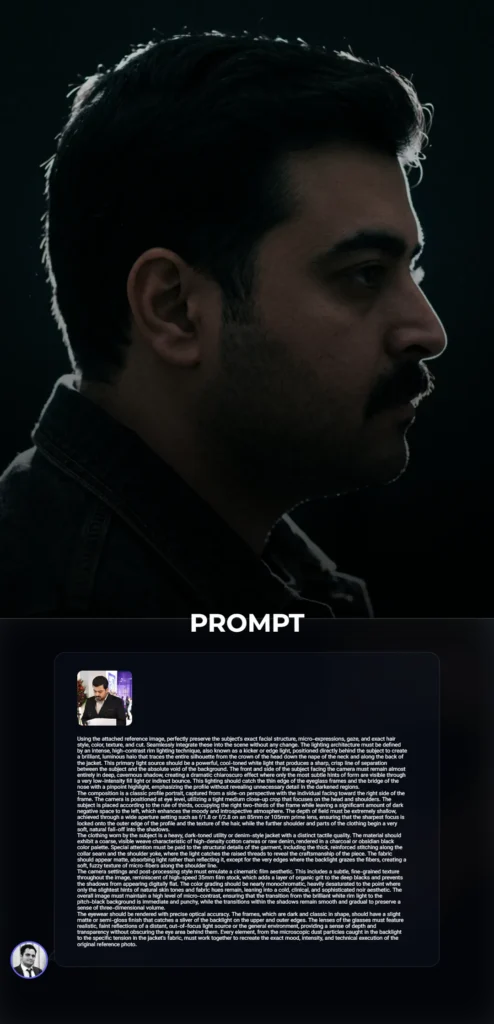
Cinematic Noir Profile Portrait with Intense Rim LightingUsing the attached reference image, perfectly preserve the subject's exact facial structure, micro-expressions, gaze, and exact hair style, color, texture, and cut. Seamlessly integrate these into the scene without any change. The lighting architecture must be defined by an intense, high-contrast rim lighting technique, also known as a kicker or edge light, positioned directly behind the subject to create a brilliant, luminous halo that traces the entire silhouette from the crown of the head down the nape of the neck and along the back of the jacket. This primary light source should be a powerful, cool-toned white light that produces a sharp, crisp line of separation between the subject and the absolute void of the background. The front and side of the subject facing the camera must remain almost entirely in deep, cavernous shadow, creating a dramatic chiaroscuro effect where only the most subtle hints of form are visible through a very low-intensity fill light or indirect bounce. This lighting should catch the thin edge of the eyeglass frames and the bridge of the nose with a pinpoint highlight, emphasizing the profile without revealing unnecessary detail in the darkened regions.
The composition is a classic profile portrait, captured from a side-on perspective with the individual facing toward the right side of the frame. The camera is positioned at eye level, utilizing a tight medium close-up crop that focuses on the head and shoulders. The subject is placed according to the rule of thirds, occupying the right two-thirds of the frame while leaving a significant amount of dark negative space to the left, which enhances the moody and introspective atmosphere. The depth of field must be extremely shallow, achieved through a wide aperture setting such as f/1.8 or f/2.8 on an 85mm or 105mm prime lens, ensuring that the sharpest focus is locked onto the outer edge of the profile and the texture of the hair, while the further shoulder and parts of the clothing begin a very soft, natural fall-off into the shadows.
The clothing worn by the subject is a heavy, dark-toned utility or denim-style jacket with a distinct tactile quality. The material should exhibit a coarse, visible weave characteristic of high-density cotton canvas or raw denim, rendered in a charcoal or obsidian black color palette. Special attention must be paid to the structural details of the garment, including the thick, reinforced stitching along the collar seam and the shoulder yoke, where the light catches the raised threads to reveal the craftsmanship of the piece. The fabric should appear matte, absorbing light rather than reflecting it, except for the very edges where the backlight grazes the fibers, creating a soft, fuzzy texture of micro-fibers along the shoulder line.
The camera settings and post-processing style must emulate a cinematic film aesthetic. This includes a subtle, fine-grained texture throughout the image, reminiscent of high-speed 35mm film stock, which adds a layer of organic grit to the deep blacks and prevents the shadows from appearing digitally flat. The color grading should be nearly monochromatic, heavily desaturated to the point where only the slightest hints of natural skin tones and fabric hues remain, leaning into a cold, clinical, and sophisticated noir aesthetic. The overall image must maintain a high level of micro-contrast, ensuring that the transition from the brilliant white rim light to the pitch-black background is immediate and punchy, while the transitions within the shadows remain smooth and gradual to preserve a sense of three-dimensional volume.
The eyewear should be rendered with precise optical accuracy. The frames, which are dark and classic in shape, should have a slight matte or semi-gloss finish that catches a sliver of the backlight on the upper and outer edges. The lenses of the glasses must feature realistic, faint reflections of a distant, out-of-focus light source or the general environment, providing a sense of depth and transparency without obscuring the eye area behind them. Every element, from the microscopic dust particles caught in the backlight to the specific tension in the jacket's fabric, must work together to recreate the exact mood, intensity, and technical execution of the original reference photo.