Peymanaistudio portrait
studio portrait
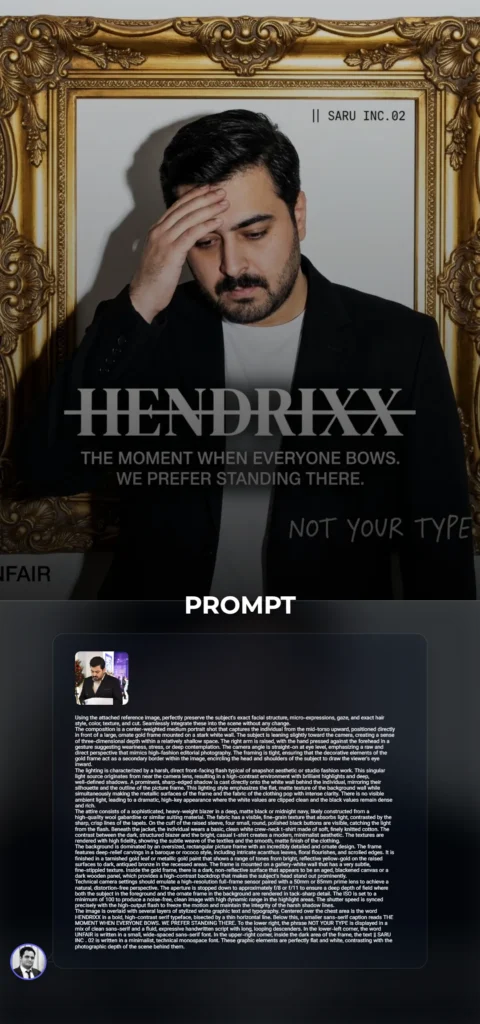
High-Fashion Editorial Portrait with Ornate Gold Frame and Harsh Flash AestheticUsing the attached reference image, perfectly preserve the subject's exact facial structure, micro-expressions, gaze, and exact hair style, color, texture, and cut. Seamlessly integrate these into the scene without any change.
The composition is a center-weighted medium portrait shot that captures the individual from the mid-torso upward, positioned directly in front of a large, ornate gold frame mounted on a stark white wall. The subject is leaning slightly toward the camera, creating a sense of three-dimensional depth within a relatively shallow space. The right arm is raised, with the hand pressed against the forehead in a gesture suggesting weariness, stress, or deep contemplation. The camera angle is straight-on at eye level, emphasizing a raw and direct perspective that mimics high-fashion editorial photography. The framing is tight, ensuring that the decorative elements of the gold frame act as a secondary border within the image, encircling the head and shoulders of the subject to draw the viewer's eye inward.
The lighting is characterized by a harsh, direct front-facing flash typical of snapshot aesthetic or studio fashion work. This singular light source originates from near the camera lens, resulting in a high-contrast environment with brilliant highlights and deep, well-defined shadows. A prominent, sharp-edged shadow is cast directly onto the white wall behind the individual, mirroring their silhouette and the outline of the picture frame. This lighting style emphasizes the flat, matte texture of the background wall while simultaneously making the metallic surfaces of the frame and the fabric of the clothing pop with intense clarity. There is no visible ambient light, leading to a dramatic, high-key appearance where the white values are clipped clean and the black values remain dense and rich.
The attire consists of a sophisticated, heavy-weight blazer in a deep, matte black or midnight navy, likely constructed from a high-quality wool gabardine or similar suiting material. The fabric has a visible, fine-grain texture that absorbs light, contrasted by the sharp, crisp lines of the lapels. On the cuff of the raised sleeve, four small, round, polished black buttons are visible, catching the light from the flash. Beneath the jacket, the individual wears a basic, clean white crew-neck t-shirt made of soft, finely knitted cotton. The contrast between the dark, structured blazer and the bright, casual t-shirt creates a modern, minimalist aesthetic. The textures are rendered with high fidelity, showing the subtle weave of the textiles and the smooth, matte finish of the clothing.
The background is dominated by an oversized, rectangular picture frame with an incredibly detailed and ornate design. The frame features deep-relief carvings in a baroque or rococo style, including intricate acanthus leaves, floral flourishes, and scrolled edges. It is finished in a tarnished gold leaf or metallic gold paint that shows a range of tones from bright, reflective yellow-gold on the raised surfaces to dark, antiqued bronze in the recessed areas. The frame is mounted on a gallery-white wall that has a very subtle, fine-stippled texture. Inside the gold frame, there is a dark, non-reflective surface that appears to be an aged, blackened canvas or a dark wooden panel, which provides a high-contrast backdrop that makes the subject's head stand out prominently.
Technical camera settings should emulate a high-resolution full-frame sensor paired with a 50mm or 85mm prime lens to achieve a natural, distortion-free perspective. The aperture is stopped down to approximately f/8 or f/11 to ensure a deep depth of field where both the subject in the foreground and the ornate frame in the background are rendered in tack-sharp detail. The ISO is set to a minimum of 100 to produce a noise-free, clean image with high dynamic range in the highlight areas. The shutter speed is synced precisely with the high-output flash to freeze the motion and maintain the integrity of the harsh shadow lines.
The image is overlaid with several layers of stylized white graphic text and typography. Centered over the chest area is the word HENDRIXX in a bold, high-contrast serif typeface, bisected by a thin horizontal line. Below this, a smaller sans-serif caption reads THE MOMENT WHEN EVERYONE BOWS. WE PREFER STANDING THERE. To the lower right, the phrase NOT YOUR TYPE is displayed in a mix of clean sans-serif and a fluid, expressive handwritten script with long, looping descenders. In the lower-left corner, the word UNFAIR is written in a small, wide-spaced sans-serif font. In the upper-right corner, inside the dark area of the frame, the text || SARU INC . 02 is written in a minimalist, technical monospace font. These graphic elements are perfectly flat and white, contrasting with the photographic depth of the scene behind them.

Cinematic Monochromatic Portrait: High-Contrast 85mm Professional Studio ShotUsing the attached reference image, perfectly preserve the subject's exact facial structure, micro-expressions, gaze, and exact hair style, color, texture, and cut. Seamlessly integrate these into the scene without any change.
The photographic composition is a tight, vertical portrait with a 9:16 aspect ratio, captured using a professional-grade 85mm prime lens to achieve a classic telephoto compression that flattens the features aesthetically while maintaining a deep sense of intimacy. The camera is positioned at a slight downward angle, looking into the subject who is leaning forward with arms crossed and resting on an invisible surface in the foreground. The depth of field is meticulously controlled at an aperture of f/2.8, ensuring the focal plane is razor-sharp across the bridge of the nose and the frontmost hand, while the background and the rear of the subject's head fall into a smooth, creamy bokeh. The image is rendered entirely in a rich, high-contrast monochromatic palette, evoking the timeless quality of traditional silver halide film. The tonal range is expansive, featuring deep, obsidian blacks in the shadows and crisp, bright whites in the highlights, with a sophisticated spectrum of charcoal, slate, and pewter grays defining the midtones. A fine, subtle film grain is present throughout the frame, mimicking an ISO 400 aesthetic to add tactile grit and a cinematic atmosphere.
The lighting is a masterclass in low-key, dramatic chiaroscuro, utilizing a single, large softbox positioned overhead and slightly to the front to create a top-down light fall-off. This positioning casts intentional, deep shadows under the brow and the nose, emphasizing the three-dimensional geometry of the subject’s form. The light catches the top of the subject's frame and the folded arms, creating high-frequency highlights on the texture of the clothing. The background is a seamless, dark studio backdrop that exhibits a very subtle radial gradient, being slightly lighter directly behind the subject's head to provide separation and depth before fading into total darkness at the edges of the frame.
The subject is adorned with specific accessories and attire that are central to the image's texture. Resting on the bridge of the nose are a pair of vintage-inspired, perfectly circular sunglasses with very thin, metallic wire frames and dark, non-reflective matte lenses that obscure the eyes while reflecting the soft, diffused light of the studio. On the right ring finger, which is prominent in the foreground, is a wide, heavy band ring made of antiqued silver or pewter. This ring features an intricate, deeply embossed Celtic or tribal scrollwork pattern that covers the entire circumference, with the dark oxidation in the recessed areas of the carving providing high visual contrast against the polished raised surfaces.
The individual wears a heavy-gauge, knitted turtleneck sweater with a distinct ribbed texture. The knit pattern is dense and tactile, showing individual loops of yarn and a vertical ribbing that is particularly visible at the cuffs of the sleeves. The fabric appears to be a thick wool or cashmere blend, with the light highlighting the soft fuzz of the fibers and the complex weave of the textile. The arms are folded one over the other, with the skin on the back of the hands showing fine pores, subtle veins, and very fine, short hair, all rendered with hyper-realistic clarity. The overall mood is one of intense focus and quiet confidence, captured in a moment of stillness that feels both modern and classic.

Professional Monochromatic Studio Portrait Prompt for High-End Cinematic Reference Face PreservationUsing the attached reference image, perfectly preserve the subject's exact facial structure, micro-expressions, gaze, and exact hair style, color, texture, and cut. Seamlessly integrate these into the scene without any change.
The entire scene is rendered in a sophisticated monochromatic palette, focusing on a deep and rich range of greyscale tones that transition from absolute ink-black in the deepest shadows to a soft, luminous silver in the highlights. The tonal depth is achieved through a high-contrast black and white film aesthetic, reminiscent of classic studio portraiture. There is a visible but extremely fine grain throughout the image, providing a tactile, organic quality to the digital render. The shadows are not just empty voids but contain subtle gradations, particularly in the fall-off around the subject's shoulders and the background, ensuring a three-dimensional feel despite the limited color spectrum. The mid-tones are carefully controlled to emphasize the smooth transitions of light across the skin and fabric, avoiding any harsh or muddy transitions in the grey levels.
The lighting is a masterclass in low-key, dramatic studio techniques, specifically utilizing a modified butterfly or overhead key light configuration. A single, soft but directional light source is positioned above and slightly in front of the individual, creating a controlled downward cast that illuminates the upper portions of the features while casting the lower regions into a velvety shadow. This lighting setup produces a distinct shadow under the nose and a deep, moody shade across the neck area, emphasizing the bone structure of the hand and the contours of the clothing. There are precise catchlights reflected in the center of the gaze, adding a sense of life and intensity to the look. The light fall-off is rapid, ensuring that the background remains a dark, non-distracting gradient that pulls all visual attention toward the central figure.
The camera is positioned at a slightly elevated, high-angle perspective, looking down towards the individual to create an intimate and compelling sense of proximity. A professional-grade 85mm prime lens is utilized to achieve a flattering, compression-filled portrait look with zero barrel distortion. The aperture is set to a wide f/1.8 or f/2.0, creating an extremely shallow depth of field that results in a creamy, out-of-focus blur starting from the individual's ears and extending to the back shoulder and the background. The focus is razor-sharp on the bridge of the nose and the eyes, while the hand in the foreground remains within the acceptable plane of focus, showing clear detail in the skin texture and the mechanical components of the wristwatch. The composition follows a centered, vertical orientation, with the individual's head and hand forming a triangular structural base that anchors the image.
The wardrobe consists of a heavy, dark-toned tailored blazer worn over a charcoal or black inner garment with a high neckline. The texture of the blazer is a fine, matte-finish wool or gabardine weave, which absorbs light rather than reflecting it, contributing to the overall somber and high-fashion mood. The lapels are crisp and well-defined, showing a subtle sheen only where the overhead light grazes the topmost edge of the fabric. The hand is positioned near the chin in a contemplative gesture, with the fingers slightly splayed to showcase the anatomy of the knuckles and the smoothness of the skin. On the wrist, a high-end timepiece is visible, featuring a round, dark-faced dial and a metallic link bracelet. The watch glass has a faint, sharp specular highlight, indicating its reflective surface, while the individual links of the band show a brushed metal texture with micro-reflections that provide a sense of hard material contrast against the soft fabric of the suit.
The background is a minimalist, studio-grade backdrop with a subtle, non-uniform texture that prevents it from looking like a flat digital fill. It consists of a dark charcoal grey that fades into pure black at the edges of the frame, creating a vignette effect that naturally frames the subject. There is a sense of atmospheric depth, as if the space behind the individual is filled with a very thin, invisible layer of haze that softens the light further. Every element, from the sharpness of the watch hands to the soft blur of the rear shoulder, is rendered with ultra-high-definition precision, ensuring that the final output is a flawless recreation of the provided reference's mood, lighting, and sophisticated composition.

Professional Monochromatic Studio Portrait with Fine Detail and Runic TattooUsing the attached reference image, perfectly preserve the subject's exact facial structure, micro-expressions, gaze, and exact hair style, color, texture, and cut. Seamlessly integrate these into the scene without any change.
The lighting for this composition is a masterclass in monochromatic studio portraiture, utilizing a sophisticated three-point lighting setup translated into a grayscale palette. The primary key light is positioned at a forty-five-degree angle from the upper right, creating a soft, diffused illumination that wraps around the contours of the subject’s form. This light produces a gentle highlight on the right side of the individual’s features while casting soft, cinematic shadows that define the jawline and the musculature of the arms. A subtle fill light is employed from the opposite side to lift the shadows just enough to retain intricate detail in the darker regions of the clothing and hair, ensuring no information is lost to pure black. The overall contrast ratio is medium-high, emphasizing the tactile quality of every surface, from the matte finish of the eyewear to the subtle sheen of the skin. The background is lit with a separate, low-intensity light to create a very subtle circular gradient, preventing the subject from blending into the backdrop and providing a three-dimensional depth to the frame.
The camera composition is a classic medium close-up, captured at a slight downward angle that emphasizes the subject's leaning posture. The lens used is likely an 85mm prime with a wide aperture of approximately f/2.8, which produces a razor-sharp focus on the subject's eyes while allowing for a graceful, shallow depth-of-field fall-off. This focus depth is meticulously controlled so that the clasped hands in the foreground are slightly softer than the facial features, drawing the viewer's eye upward. The framing is tight and intimate, with the individual’s torso filling the lower half of the frame and the arms forming a triangular base that leads the eye toward the center. The image exhibits a fine, professional film grain that adds a timeless, organic texture to the digital capture, avoiding an overly clinical digital look. There is a slight, naturalistic vignetting toward the corners of the frame which serves to further centralize the focus on the subject's presence and expression.
The individual is adorned with specific accessories and attire that are critical to the image's aesthetic. The subject wears thick, black acetate-framed glasses with a rounded pantos shape and visible silver hinge pins at the temples. The frames have a slight satin-to-gloss finish that catches the studio lights. On the left ring finger, there is a wide, substantial metallic ring with a flat top and a recessed dark square stone or inlay. On the left wrist, a classic analog timepiece is visible, featuring a circular silver-toned stainless steel case, a light-colored dial with thin baton indices, and a dark, textured leather strap. The subject is wearing a dark, charcoal or black long-sleeved crewneck sweater made of a fine-gauge knit material, possibly a merino wool or high-quality cotton blend. The sleeves are pushed up to the mid-forearm, revealing a specific tattoo on the inner right forearm consisting of five distinct, linear, runic-style characters or symbols oriented vertically toward the wrist.
The textures throughout the image are rendered with extreme high-fidelity detail. The knit of the sweater shows a distinct weave pattern, especially where the fabric bunches at the elbows and wrists. The skin texture on the hands and forearms is highly detailed, showing natural pores, fine lines at the knuckles, and the subtle variations in skin tone that occur in a black and white medium. The tattoo ink appears slightly faded into the skin, suggesting it is not brand new, and the edges of the symbols follow the natural curvature of the forearm. The clasped hands are positioned with the fingers of the right hand interlaced over the left, creating a complex series of highlights and shadows across the knuckles and palms. The background is a seamless, non-reflective studio paper or painted wall with a smooth, matte texture that transitionally gradients from a medium charcoal gray on the left to a slightly lighter slate gray on the right, providing a clean and distraction-free environment that prioritizes the subject’s form and accessories.

High-Fashion Editorial Portrait with Ornate Gold Frame and Harsh Flash AestheticUsing the attached reference image, perfectly preserve the subject's exact facial structure, micro-expressions, gaze, and exact hair style, color, texture, and cut. Seamlessly integrate these into the scene without any change.
The composition is a center-weighted medium portrait shot that captures the individual from the mid-torso upward, positioned directly in front of a large, ornate gold frame mounted on a stark white wall. The subject is leaning slightly toward the camera, creating a sense of three-dimensional depth within a relatively shallow space. The right arm is raised, with the hand pressed against the forehead in a gesture suggesting weariness, stress, or deep contemplation. The camera angle is straight-on at eye level, emphasizing a raw and direct perspective that mimics high-fashion editorial photography. The framing is tight, ensuring that the decorative elements of the gold frame act as a secondary border within the image, encircling the head and shoulders of the subject to draw the viewer's eye inward.
The lighting is characterized by a harsh, direct front-facing flash typical of snapshot aesthetic or studio fashion work. This singular light source originates from near the camera lens, resulting in a high-contrast environment with brilliant highlights and deep, well-defined shadows. A prominent, sharp-edged shadow is cast directly onto the white wall behind the individual, mirroring their silhouette and the outline of the picture frame. This lighting style emphasizes the flat, matte texture of the background wall while simultaneously making the metallic surfaces of the frame and the fabric of the clothing pop with intense clarity. There is no visible ambient light, leading to a dramatic, high-key appearance where the white values are clipped clean and the black values remain dense and rich.
The attire consists of a sophisticated, heavy-weight blazer in a deep, matte black or midnight navy, likely constructed from a high-quality wool gabardine or similar suiting material. The fabric has a visible, fine-grain texture that absorbs light, contrasted by the sharp, crisp lines of the lapels. On the cuff of the raised sleeve, four small, round, polished black buttons are visible, catching the light from the flash. Beneath the jacket, the individual wears a basic, clean white crew-neck t-shirt made of soft, finely knitted cotton. The contrast between the dark, structured blazer and the bright, casual t-shirt creates a modern, minimalist aesthetic. The textures are rendered with high fidelity, showing the subtle weave of the textiles and the smooth, matte finish of the clothing.
The background is dominated by an oversized, rectangular picture frame with an incredibly detailed and ornate design. The frame features deep-relief carvings in a baroque or rococo style, including intricate acanthus leaves, floral flourishes, and scrolled edges. It is finished in a tarnished gold leaf or metallic gold paint that shows a range of tones from bright, reflective yellow-gold on the raised surfaces to dark, antiqued bronze in the recessed areas. The frame is mounted on a gallery-white wall that has a very subtle, fine-stippled texture. Inside the gold frame, there is a dark, non-reflective surface that appears to be an aged, blackened canvas or a dark wooden panel, which provides a high-contrast backdrop that makes the subject's head stand out prominently.
Technical camera settings should emulate a high-resolution full-frame sensor paired with a 50mm or 85mm prime lens to achieve a natural, distortion-free perspective. The aperture is stopped down to approximately f/8 or f/11 to ensure a deep depth of field where both the subject in the foreground and the ornate frame in the background are rendered in tack-sharp detail. The ISO is set to a minimum of 100 to produce a noise-free, clean image with high dynamic range in the highlight areas. The shutter speed is synced precisely with the high-output flash to freeze the motion and maintain the integrity of the harsh shadow lines.
The image is overlaid with several layers of stylized white graphic text and typography. Centered over the chest area is the word HENDRIXX in a bold, high-contrast serif typeface, bisected by a thin horizontal line. Below this, a smaller sans-serif caption reads THE MOMENT WHEN EVERYONE BOWS. WE PREFER STANDING THERE. To the lower right, the phrase NOT YOUR TYPE is displayed in a mix of clean sans-serif and a fluid, expressive handwritten script with long, looping descenders. In the lower-left corner, the word UNFAIR is written in a small, wide-spaced sans-serif font. In the upper-right corner, inside the dark area of the frame, the text || SARU INC . 02 is written in a minimalist, technical monospace font. These graphic elements are perfectly flat and white, contrasting with the photographic depth of the scene behind them.
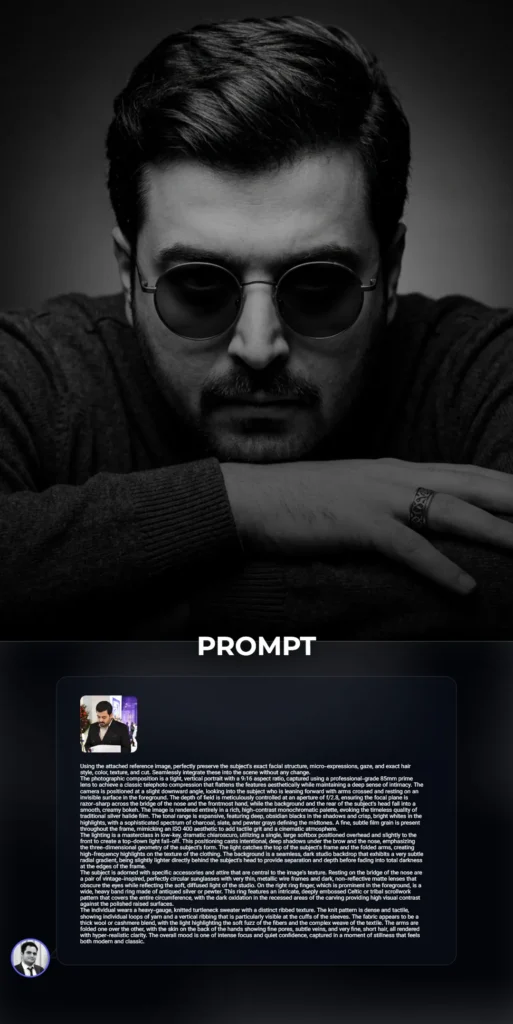
Cinematic Monochromatic Portrait: High-Contrast 85mm Professional Studio ShotUsing the attached reference image, perfectly preserve the subject's exact facial structure, micro-expressions, gaze, and exact hair style, color, texture, and cut. Seamlessly integrate these into the scene without any change.
The photographic composition is a tight, vertical portrait with a 9:16 aspect ratio, captured using a professional-grade 85mm prime lens to achieve a classic telephoto compression that flattens the features aesthetically while maintaining a deep sense of intimacy. The camera is positioned at a slight downward angle, looking into the subject who is leaning forward with arms crossed and resting on an invisible surface in the foreground. The depth of field is meticulously controlled at an aperture of f/2.8, ensuring the focal plane is razor-sharp across the bridge of the nose and the frontmost hand, while the background and the rear of the subject's head fall into a smooth, creamy bokeh. The image is rendered entirely in a rich, high-contrast monochromatic palette, evoking the timeless quality of traditional silver halide film. The tonal range is expansive, featuring deep, obsidian blacks in the shadows and crisp, bright whites in the highlights, with a sophisticated spectrum of charcoal, slate, and pewter grays defining the midtones. A fine, subtle film grain is present throughout the frame, mimicking an ISO 400 aesthetic to add tactile grit and a cinematic atmosphere.
The lighting is a masterclass in low-key, dramatic chiaroscuro, utilizing a single, large softbox positioned overhead and slightly to the front to create a top-down light fall-off. This positioning casts intentional, deep shadows under the brow and the nose, emphasizing the three-dimensional geometry of the subject’s form. The light catches the top of the subject's frame and the folded arms, creating high-frequency highlights on the texture of the clothing. The background is a seamless, dark studio backdrop that exhibits a very subtle radial gradient, being slightly lighter directly behind the subject's head to provide separation and depth before fading into total darkness at the edges of the frame.
The subject is adorned with specific accessories and attire that are central to the image's texture. Resting on the bridge of the nose are a pair of vintage-inspired, perfectly circular sunglasses with very thin, metallic wire frames and dark, non-reflective matte lenses that obscure the eyes while reflecting the soft, diffused light of the studio. On the right ring finger, which is prominent in the foreground, is a wide, heavy band ring made of antiqued silver or pewter. This ring features an intricate, deeply embossed Celtic or tribal scrollwork pattern that covers the entire circumference, with the dark oxidation in the recessed areas of the carving providing high visual contrast against the polished raised surfaces.
The individual wears a heavy-gauge, knitted turtleneck sweater with a distinct ribbed texture. The knit pattern is dense and tactile, showing individual loops of yarn and a vertical ribbing that is particularly visible at the cuffs of the sleeves. The fabric appears to be a thick wool or cashmere blend, with the light highlighting the soft fuzz of the fibers and the complex weave of the textile. The arms are folded one over the other, with the skin on the back of the hands showing fine pores, subtle veins, and very fine, short hair, all rendered with hyper-realistic clarity. The overall mood is one of intense focus and quiet confidence, captured in a moment of stillness that feels both modern and classic.

Professional Monochromatic Studio Portrait Prompt for High-End Cinematic Reference Face PreservationUsing the attached reference image, perfectly preserve the subject's exact facial structure, micro-expressions, gaze, and exact hair style, color, texture, and cut. Seamlessly integrate these into the scene without any change.
The entire scene is rendered in a sophisticated monochromatic palette, focusing on a deep and rich range of greyscale tones that transition from absolute ink-black in the deepest shadows to a soft, luminous silver in the highlights. The tonal depth is achieved through a high-contrast black and white film aesthetic, reminiscent of classic studio portraiture. There is a visible but extremely fine grain throughout the image, providing a tactile, organic quality to the digital render. The shadows are not just empty voids but contain subtle gradations, particularly in the fall-off around the subject's shoulders and the background, ensuring a three-dimensional feel despite the limited color spectrum. The mid-tones are carefully controlled to emphasize the smooth transitions of light across the skin and fabric, avoiding any harsh or muddy transitions in the grey levels.
The lighting is a masterclass in low-key, dramatic studio techniques, specifically utilizing a modified butterfly or overhead key light configuration. A single, soft but directional light source is positioned above and slightly in front of the individual, creating a controlled downward cast that illuminates the upper portions of the features while casting the lower regions into a velvety shadow. This lighting setup produces a distinct shadow under the nose and a deep, moody shade across the neck area, emphasizing the bone structure of the hand and the contours of the clothing. There are precise catchlights reflected in the center of the gaze, adding a sense of life and intensity to the look. The light fall-off is rapid, ensuring that the background remains a dark, non-distracting gradient that pulls all visual attention toward the central figure.
The camera is positioned at a slightly elevated, high-angle perspective, looking down towards the individual to create an intimate and compelling sense of proximity. A professional-grade 85mm prime lens is utilized to achieve a flattering, compression-filled portrait look with zero barrel distortion. The aperture is set to a wide f/1.8 or f/2.0, creating an extremely shallow depth of field that results in a creamy, out-of-focus blur starting from the individual's ears and extending to the back shoulder and the background. The focus is razor-sharp on the bridge of the nose and the eyes, while the hand in the foreground remains within the acceptable plane of focus, showing clear detail in the skin texture and the mechanical components of the wristwatch. The composition follows a centered, vertical orientation, with the individual's head and hand forming a triangular structural base that anchors the image.
The wardrobe consists of a heavy, dark-toned tailored blazer worn over a charcoal or black inner garment with a high neckline. The texture of the blazer is a fine, matte-finish wool or gabardine weave, which absorbs light rather than reflecting it, contributing to the overall somber and high-fashion mood. The lapels are crisp and well-defined, showing a subtle sheen only where the overhead light grazes the topmost edge of the fabric. The hand is positioned near the chin in a contemplative gesture, with the fingers slightly splayed to showcase the anatomy of the knuckles and the smoothness of the skin. On the wrist, a high-end timepiece is visible, featuring a round, dark-faced dial and a metallic link bracelet. The watch glass has a faint, sharp specular highlight, indicating its reflective surface, while the individual links of the band show a brushed metal texture with micro-reflections that provide a sense of hard material contrast against the soft fabric of the suit.
The background is a minimalist, studio-grade backdrop with a subtle, non-uniform texture that prevents it from looking like a flat digital fill. It consists of a dark charcoal grey that fades into pure black at the edges of the frame, creating a vignette effect that naturally frames the subject. There is a sense of atmospheric depth, as if the space behind the individual is filled with a very thin, invisible layer of haze that softens the light further. Every element, from the sharpness of the watch hands to the soft blur of the rear shoulder, is rendered with ultra-high-definition precision, ensuring that the final output is a flawless recreation of the provided reference's mood, lighting, and sophisticated composition.
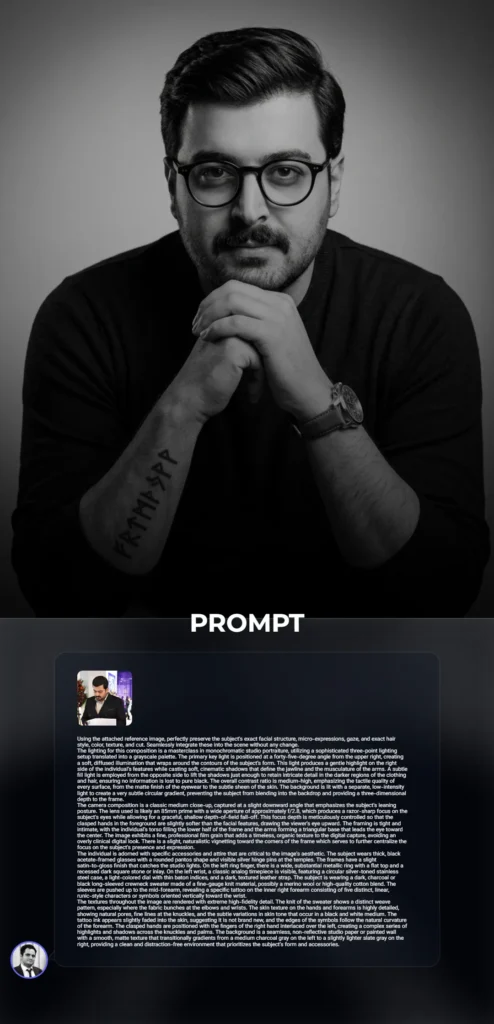
Professional Monochromatic Studio Portrait with Fine Detail and Runic TattooUsing the attached reference image, perfectly preserve the subject's exact facial structure, micro-expressions, gaze, and exact hair style, color, texture, and cut. Seamlessly integrate these into the scene without any change.
The lighting for this composition is a masterclass in monochromatic studio portraiture, utilizing a sophisticated three-point lighting setup translated into a grayscale palette. The primary key light is positioned at a forty-five-degree angle from the upper right, creating a soft, diffused illumination that wraps around the contours of the subject’s form. This light produces a gentle highlight on the right side of the individual’s features while casting soft, cinematic shadows that define the jawline and the musculature of the arms. A subtle fill light is employed from the opposite side to lift the shadows just enough to retain intricate detail in the darker regions of the clothing and hair, ensuring no information is lost to pure black. The overall contrast ratio is medium-high, emphasizing the tactile quality of every surface, from the matte finish of the eyewear to the subtle sheen of the skin. The background is lit with a separate, low-intensity light to create a very subtle circular gradient, preventing the subject from blending into the backdrop and providing a three-dimensional depth to the frame.
The camera composition is a classic medium close-up, captured at a slight downward angle that emphasizes the subject's leaning posture. The lens used is likely an 85mm prime with a wide aperture of approximately f/2.8, which produces a razor-sharp focus on the subject's eyes while allowing for a graceful, shallow depth-of-field fall-off. This focus depth is meticulously controlled so that the clasped hands in the foreground are slightly softer than the facial features, drawing the viewer's eye upward. The framing is tight and intimate, with the individual’s torso filling the lower half of the frame and the arms forming a triangular base that leads the eye toward the center. The image exhibits a fine, professional film grain that adds a timeless, organic texture to the digital capture, avoiding an overly clinical digital look. There is a slight, naturalistic vignetting toward the corners of the frame which serves to further centralize the focus on the subject's presence and expression.
The individual is adorned with specific accessories and attire that are critical to the image's aesthetic. The subject wears thick, black acetate-framed glasses with a rounded pantos shape and visible silver hinge pins at the temples. The frames have a slight satin-to-gloss finish that catches the studio lights. On the left ring finger, there is a wide, substantial metallic ring with a flat top and a recessed dark square stone or inlay. On the left wrist, a classic analog timepiece is visible, featuring a circular silver-toned stainless steel case, a light-colored dial with thin baton indices, and a dark, textured leather strap. The subject is wearing a dark, charcoal or black long-sleeved crewneck sweater made of a fine-gauge knit material, possibly a merino wool or high-quality cotton blend. The sleeves are pushed up to the mid-forearm, revealing a specific tattoo on the inner right forearm consisting of five distinct, linear, runic-style characters or symbols oriented vertically toward the wrist.
The textures throughout the image are rendered with extreme high-fidelity detail. The knit of the sweater shows a distinct weave pattern, especially where the fabric bunches at the elbows and wrists. The skin texture on the hands and forearms is highly detailed, showing natural pores, fine lines at the knuckles, and the subtle variations in skin tone that occur in a black and white medium. The tattoo ink appears slightly faded into the skin, suggesting it is not brand new, and the edges of the symbols follow the natural curvature of the forearm. The clasped hands are positioned with the fingers of the right hand interlaced over the left, creating a complex series of highlights and shadows across the knuckles and palms. The background is a seamless, non-reflective studio paper or painted wall with a smooth, matte texture that transitionally gradients from a medium charcoal gray on the left to a slightly lighter slate gray on the right, providing a clean and distraction-free environment that prioritizes the subject’s form and accessories.

High-Fashion Editorial Portrait with Ornate Gold Frame and Harsh Flash AestheticUsing the attached reference image, perfectly preserve the subject's exact facial structure, micro-expressions, gaze, and exact hair style, color, texture, and cut. Seamlessly integrate these into the scene without any change.
The composition is a center-weighted medium portrait shot that captures the individual from the mid-torso upward, positioned directly in front of a large, ornate gold frame mounted on a stark white wall. The subject is leaning slightly toward the camera, creating a sense of three-dimensional depth within a relatively shallow space. The right arm is raised, with the hand pressed against the forehead in a gesture suggesting weariness, stress, or deep contemplation. The camera angle is straight-on at eye level, emphasizing a raw and direct perspective that mimics high-fashion editorial photography. The framing is tight, ensuring that the decorative elements of the gold frame act as a secondary border within the image, encircling the head and shoulders of the subject to draw the viewer's eye inward.
The lighting is characterized by a harsh, direct front-facing flash typical of snapshot aesthetic or studio fashion work. This singular light source originates from near the camera lens, resulting in a high-contrast environment with brilliant highlights and deep, well-defined shadows. A prominent, sharp-edged shadow is cast directly onto the white wall behind the individual, mirroring their silhouette and the outline of the picture frame. This lighting style emphasizes the flat, matte texture of the background wall while simultaneously making the metallic surfaces of the frame and the fabric of the clothing pop with intense clarity. There is no visible ambient light, leading to a dramatic, high-key appearance where the white values are clipped clean and the black values remain dense and rich.
The attire consists of a sophisticated, heavy-weight blazer in a deep, matte black or midnight navy, likely constructed from a high-quality wool gabardine or similar suiting material. The fabric has a visible, fine-grain texture that absorbs light, contrasted by the sharp, crisp lines of the lapels. On the cuff of the raised sleeve, four small, round, polished black buttons are visible, catching the light from the flash. Beneath the jacket, the individual wears a basic, clean white crew-neck t-shirt made of soft, finely knitted cotton. The contrast between the dark, structured blazer and the bright, casual t-shirt creates a modern, minimalist aesthetic. The textures are rendered with high fidelity, showing the subtle weave of the textiles and the smooth, matte finish of the clothing.
The background is dominated by an oversized, rectangular picture frame with an incredibly detailed and ornate design. The frame features deep-relief carvings in a baroque or rococo style, including intricate acanthus leaves, floral flourishes, and scrolled edges. It is finished in a tarnished gold leaf or metallic gold paint that shows a range of tones from bright, reflective yellow-gold on the raised surfaces to dark, antiqued bronze in the recessed areas. The frame is mounted on a gallery-white wall that has a very subtle, fine-stippled texture. Inside the gold frame, there is a dark, non-reflective surface that appears to be an aged, blackened canvas or a dark wooden panel, which provides a high-contrast backdrop that makes the subject's head stand out prominently.
Technical camera settings should emulate a high-resolution full-frame sensor paired with a 50mm or 85mm prime lens to achieve a natural, distortion-free perspective. The aperture is stopped down to approximately f/8 or f/11 to ensure a deep depth of field where both the subject in the foreground and the ornate frame in the background are rendered in tack-sharp detail. The ISO is set to a minimum of 100 to produce a noise-free, clean image with high dynamic range in the highlight areas. The shutter speed is synced precisely with the high-output flash to freeze the motion and maintain the integrity of the harsh shadow lines.
The image is overlaid with several layers of stylized white graphic text and typography. Centered over the chest area is the word HENDRIXX in a bold, high-contrast serif typeface, bisected by a thin horizontal line. Below this, a smaller sans-serif caption reads THE MOMENT WHEN EVERYONE BOWS. WE PREFER STANDING THERE. To the lower right, the phrase NOT YOUR TYPE is displayed in a mix of clean sans-serif and a fluid, expressive handwritten script with long, looping descenders. In the lower-left corner, the word UNFAIR is written in a small, wide-spaced sans-serif font. In the upper-right corner, inside the dark area of the frame, the text || SARU INC . 02 is written in a minimalist, technical monospace font. These graphic elements are perfectly flat and white, contrasting with the photographic depth of the scene behind them.
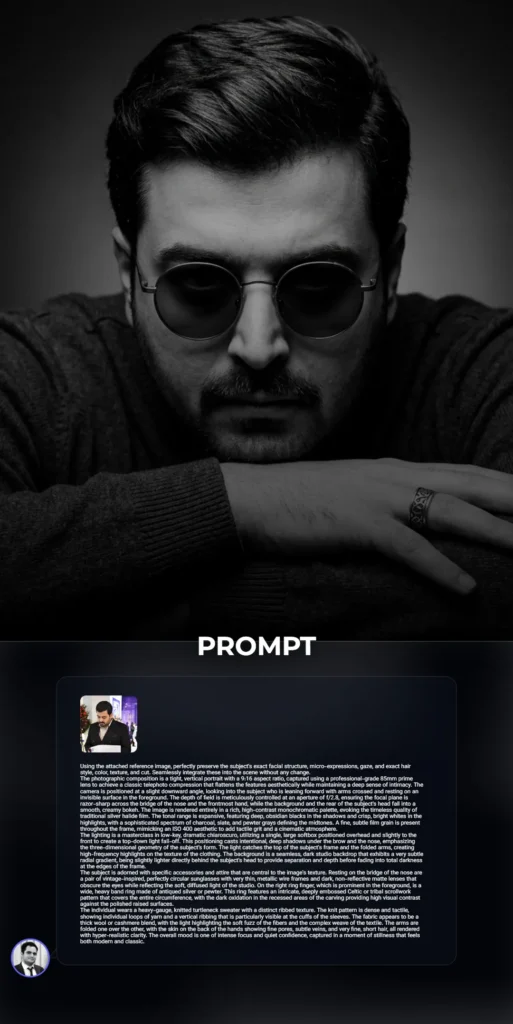
Cinematic Monochromatic Portrait: High-Contrast 85mm Professional Studio ShotUsing the attached reference image, perfectly preserve the subject's exact facial structure, micro-expressions, gaze, and exact hair style, color, texture, and cut. Seamlessly integrate these into the scene without any change.
The photographic composition is a tight, vertical portrait with a 9:16 aspect ratio, captured using a professional-grade 85mm prime lens to achieve a classic telephoto compression that flattens the features aesthetically while maintaining a deep sense of intimacy. The camera is positioned at a slight downward angle, looking into the subject who is leaning forward with arms crossed and resting on an invisible surface in the foreground. The depth of field is meticulously controlled at an aperture of f/2.8, ensuring the focal plane is razor-sharp across the bridge of the nose and the frontmost hand, while the background and the rear of the subject's head fall into a smooth, creamy bokeh. The image is rendered entirely in a rich, high-contrast monochromatic palette, evoking the timeless quality of traditional silver halide film. The tonal range is expansive, featuring deep, obsidian blacks in the shadows and crisp, bright whites in the highlights, with a sophisticated spectrum of charcoal, slate, and pewter grays defining the midtones. A fine, subtle film grain is present throughout the frame, mimicking an ISO 400 aesthetic to add tactile grit and a cinematic atmosphere.
The lighting is a masterclass in low-key, dramatic chiaroscuro, utilizing a single, large softbox positioned overhead and slightly to the front to create a top-down light fall-off. This positioning casts intentional, deep shadows under the brow and the nose, emphasizing the three-dimensional geometry of the subject’s form. The light catches the top of the subject's frame and the folded arms, creating high-frequency highlights on the texture of the clothing. The background is a seamless, dark studio backdrop that exhibits a very subtle radial gradient, being slightly lighter directly behind the subject's head to provide separation and depth before fading into total darkness at the edges of the frame.
The subject is adorned with specific accessories and attire that are central to the image's texture. Resting on the bridge of the nose are a pair of vintage-inspired, perfectly circular sunglasses with very thin, metallic wire frames and dark, non-reflective matte lenses that obscure the eyes while reflecting the soft, diffused light of the studio. On the right ring finger, which is prominent in the foreground, is a wide, heavy band ring made of antiqued silver or pewter. This ring features an intricate, deeply embossed Celtic or tribal scrollwork pattern that covers the entire circumference, with the dark oxidation in the recessed areas of the carving providing high visual contrast against the polished raised surfaces.
The individual wears a heavy-gauge, knitted turtleneck sweater with a distinct ribbed texture. The knit pattern is dense and tactile, showing individual loops of yarn and a vertical ribbing that is particularly visible at the cuffs of the sleeves. The fabric appears to be a thick wool or cashmere blend, with the light highlighting the soft fuzz of the fibers and the complex weave of the textile. The arms are folded one over the other, with the skin on the back of the hands showing fine pores, subtle veins, and very fine, short hair, all rendered with hyper-realistic clarity. The overall mood is one of intense focus and quiet confidence, captured in a moment of stillness that feels both modern and classic.
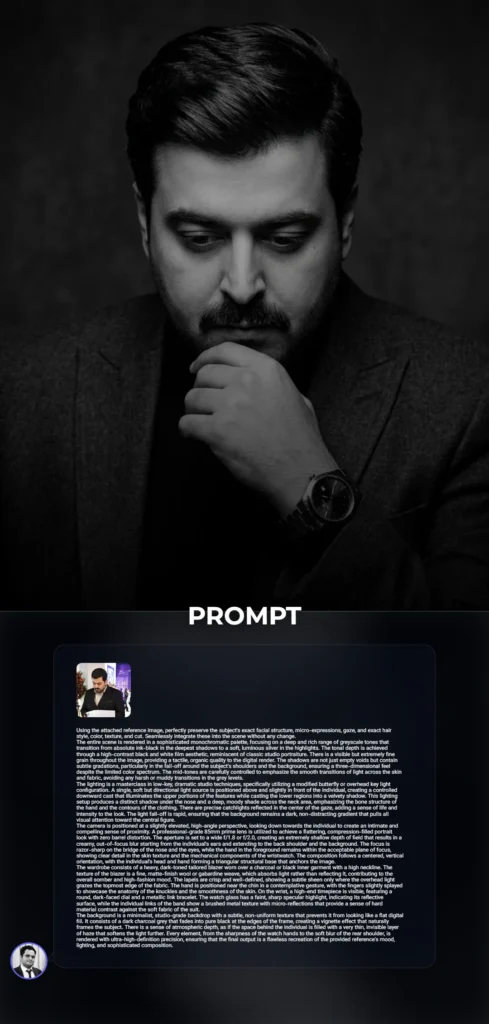
Professional Monochromatic Studio Portrait Prompt for High-End Cinematic Reference Face PreservationUsing the attached reference image, perfectly preserve the subject's exact facial structure, micro-expressions, gaze, and exact hair style, color, texture, and cut. Seamlessly integrate these into the scene without any change.
The entire scene is rendered in a sophisticated monochromatic palette, focusing on a deep and rich range of greyscale tones that transition from absolute ink-black in the deepest shadows to a soft, luminous silver in the highlights. The tonal depth is achieved through a high-contrast black and white film aesthetic, reminiscent of classic studio portraiture. There is a visible but extremely fine grain throughout the image, providing a tactile, organic quality to the digital render. The shadows are not just empty voids but contain subtle gradations, particularly in the fall-off around the subject's shoulders and the background, ensuring a three-dimensional feel despite the limited color spectrum. The mid-tones are carefully controlled to emphasize the smooth transitions of light across the skin and fabric, avoiding any harsh or muddy transitions in the grey levels.
The lighting is a masterclass in low-key, dramatic studio techniques, specifically utilizing a modified butterfly or overhead key light configuration. A single, soft but directional light source is positioned above and slightly in front of the individual, creating a controlled downward cast that illuminates the upper portions of the features while casting the lower regions into a velvety shadow. This lighting setup produces a distinct shadow under the nose and a deep, moody shade across the neck area, emphasizing the bone structure of the hand and the contours of the clothing. There are precise catchlights reflected in the center of the gaze, adding a sense of life and intensity to the look. The light fall-off is rapid, ensuring that the background remains a dark, non-distracting gradient that pulls all visual attention toward the central figure.
The camera is positioned at a slightly elevated, high-angle perspective, looking down towards the individual to create an intimate and compelling sense of proximity. A professional-grade 85mm prime lens is utilized to achieve a flattering, compression-filled portrait look with zero barrel distortion. The aperture is set to a wide f/1.8 or f/2.0, creating an extremely shallow depth of field that results in a creamy, out-of-focus blur starting from the individual's ears and extending to the back shoulder and the background. The focus is razor-sharp on the bridge of the nose and the eyes, while the hand in the foreground remains within the acceptable plane of focus, showing clear detail in the skin texture and the mechanical components of the wristwatch. The composition follows a centered, vertical orientation, with the individual's head and hand forming a triangular structural base that anchors the image.
The wardrobe consists of a heavy, dark-toned tailored blazer worn over a charcoal or black inner garment with a high neckline. The texture of the blazer is a fine, matte-finish wool or gabardine weave, which absorbs light rather than reflecting it, contributing to the overall somber and high-fashion mood. The lapels are crisp and well-defined, showing a subtle sheen only where the overhead light grazes the topmost edge of the fabric. The hand is positioned near the chin in a contemplative gesture, with the fingers slightly splayed to showcase the anatomy of the knuckles and the smoothness of the skin. On the wrist, a high-end timepiece is visible, featuring a round, dark-faced dial and a metallic link bracelet. The watch glass has a faint, sharp specular highlight, indicating its reflective surface, while the individual links of the band show a brushed metal texture with micro-reflections that provide a sense of hard material contrast against the soft fabric of the suit.
The background is a minimalist, studio-grade backdrop with a subtle, non-uniform texture that prevents it from looking like a flat digital fill. It consists of a dark charcoal grey that fades into pure black at the edges of the frame, creating a vignette effect that naturally frames the subject. There is a sense of atmospheric depth, as if the space behind the individual is filled with a very thin, invisible layer of haze that softens the light further. Every element, from the sharpness of the watch hands to the soft blur of the rear shoulder, is rendered with ultra-high-definition precision, ensuring that the final output is a flawless recreation of the provided reference's mood, lighting, and sophisticated composition.
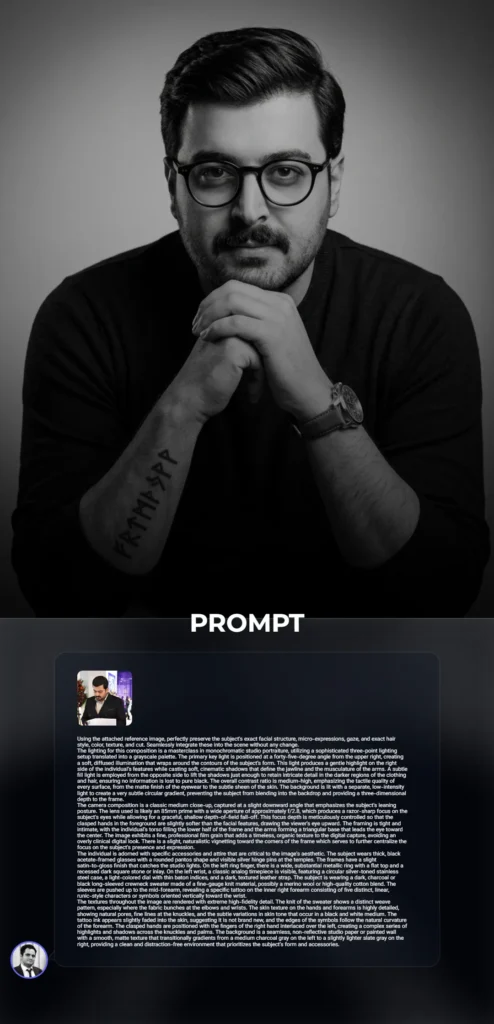
Professional Monochromatic Studio Portrait with Fine Detail and Runic TattooUsing the attached reference image, perfectly preserve the subject's exact facial structure, micro-expressions, gaze, and exact hair style, color, texture, and cut. Seamlessly integrate these into the scene without any change.
The lighting for this composition is a masterclass in monochromatic studio portraiture, utilizing a sophisticated three-point lighting setup translated into a grayscale palette. The primary key light is positioned at a forty-five-degree angle from the upper right, creating a soft, diffused illumination that wraps around the contours of the subject’s form. This light produces a gentle highlight on the right side of the individual’s features while casting soft, cinematic shadows that define the jawline and the musculature of the arms. A subtle fill light is employed from the opposite side to lift the shadows just enough to retain intricate detail in the darker regions of the clothing and hair, ensuring no information is lost to pure black. The overall contrast ratio is medium-high, emphasizing the tactile quality of every surface, from the matte finish of the eyewear to the subtle sheen of the skin. The background is lit with a separate, low-intensity light to create a very subtle circular gradient, preventing the subject from blending into the backdrop and providing a three-dimensional depth to the frame.
The camera composition is a classic medium close-up, captured at a slight downward angle that emphasizes the subject's leaning posture. The lens used is likely an 85mm prime with a wide aperture of approximately f/2.8, which produces a razor-sharp focus on the subject's eyes while allowing for a graceful, shallow depth-of-field fall-off. This focus depth is meticulously controlled so that the clasped hands in the foreground are slightly softer than the facial features, drawing the viewer's eye upward. The framing is tight and intimate, with the individual’s torso filling the lower half of the frame and the arms forming a triangular base that leads the eye toward the center. The image exhibits a fine, professional film grain that adds a timeless, organic texture to the digital capture, avoiding an overly clinical digital look. There is a slight, naturalistic vignetting toward the corners of the frame which serves to further centralize the focus on the subject's presence and expression.
The individual is adorned with specific accessories and attire that are critical to the image's aesthetic. The subject wears thick, black acetate-framed glasses with a rounded pantos shape and visible silver hinge pins at the temples. The frames have a slight satin-to-gloss finish that catches the studio lights. On the left ring finger, there is a wide, substantial metallic ring with a flat top and a recessed dark square stone or inlay. On the left wrist, a classic analog timepiece is visible, featuring a circular silver-toned stainless steel case, a light-colored dial with thin baton indices, and a dark, textured leather strap. The subject is wearing a dark, charcoal or black long-sleeved crewneck sweater made of a fine-gauge knit material, possibly a merino wool or high-quality cotton blend. The sleeves are pushed up to the mid-forearm, revealing a specific tattoo on the inner right forearm consisting of five distinct, linear, runic-style characters or symbols oriented vertically toward the wrist.
The textures throughout the image are rendered with extreme high-fidelity detail. The knit of the sweater shows a distinct weave pattern, especially where the fabric bunches at the elbows and wrists. The skin texture on the hands and forearms is highly detailed, showing natural pores, fine lines at the knuckles, and the subtle variations in skin tone that occur in a black and white medium. The tattoo ink appears slightly faded into the skin, suggesting it is not brand new, and the edges of the symbols follow the natural curvature of the forearm. The clasped hands are positioned with the fingers of the right hand interlaced over the left, creating a complex series of highlights and shadows across the knuckles and palms. The background is a seamless, non-reflective studio paper or painted wall with a smooth, matte texture that transitionally gradients from a medium charcoal gray on the left to a slightly lighter slate gray on the right, providing a clean and distraction-free environment that prioritizes the subject’s form and accessories.