
Peymanaiorange and blue
orange and blue
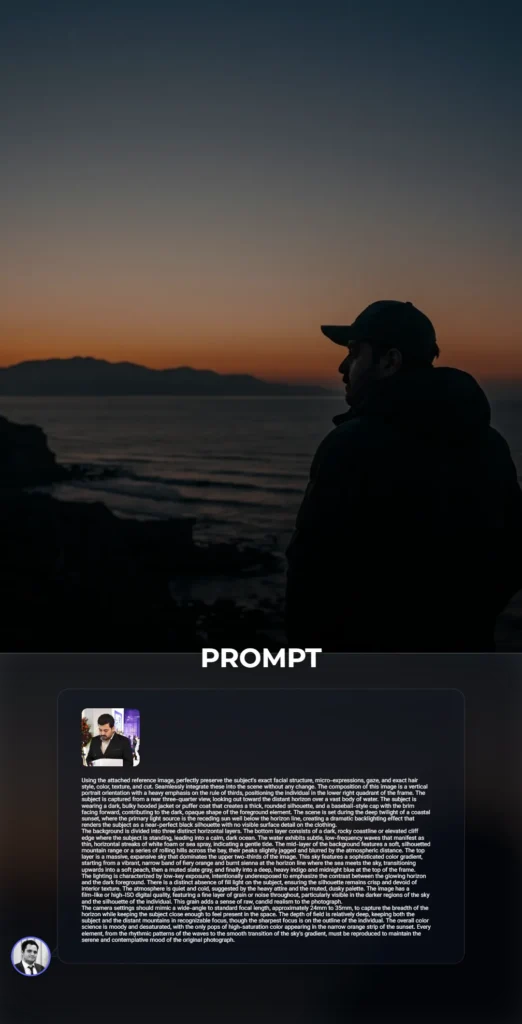
Moody Twilight Silhouette Coastal Portrait PromptUsing the attached reference image, perfectly preserve the subject's exact facial structure, micro-expressions, gaze, and exact hair style, color, texture, and cut. Seamlessly integrate these into the scene without any change. The composition of this image is a vertical portrait orientation with a heavy emphasis on the rule of thirds, positioning the individual in the lower right quadrant of the frame. The subject is captured from a rear three-quarter view, looking out toward the distant horizon over a vast body of water. The subject is wearing a dark, bulky hooded jacket or puffer coat that creates a thick, rounded silhouette, and a baseball-style cap with the brim facing forward, contributing to the dark, opaque shape of the foreground element. The scene is set during the deep twilight of a coastal sunset, where the primary light source is the receding sun well below the horizon line, creating a dramatic backlighting effect that renders the subject as a near-perfect black silhouette with no visible surface detail on the clothing.
The background is divided into three distinct horizontal layers. The bottom layer consists of a dark, rocky coastline or elevated cliff edge where the subject is standing, leading into a calm, dark ocean. The water exhibits subtle, low-frequency waves that manifest as thin, horizontal streaks of white foam or sea spray, indicating a gentle tide. The mid-layer of the background features a soft, silhouetted mountain range or a series of rolling hills across the bay, their peaks slightly jagged and blurred by the atmospheric distance. The top layer is a massive, expansive sky that dominates the upper two-thirds of the image. This sky features a sophisticated color gradient, starting from a vibrant, narrow band of fiery orange and burnt sienna at the horizon line where the sea meets the sky, transitioning upwards into a soft peach, then a muted slate gray, and finally into a deep, heavy indigo and midnight blue at the top of the frame.
The lighting is characterized by low-key exposure, intentionally underexposed to emphasize the contrast between the glowing horizon and the dark foreground. There is a distinct absence of fill light on the subject, ensuring the silhouette remains crisp and devoid of interior texture. The atmosphere is quiet and cold, suggested by the heavy attire and the muted, dusky palette. The image has a film-like or high-ISO digital quality, featuring a fine layer of grain or noise throughout, particularly visible in the darker regions of the sky and the silhouette of the individual. This grain adds a sense of raw, candid realism to the photograph.
The camera settings should mimic a wide-angle to standard focal length, approximately 24mm to 35mm, to capture the breadth of the horizon while keeping the subject close enough to feel present in the space. The depth of field is relatively deep, keeping both the subject and the distant mountains in recognizable focus, though the sharpest focus is on the outline of the individual. The overall color science is moody and desaturated, with the only pops of high-saturation color appearing in the narrow orange strip of the sunset. Every element, from the rhythmic patterns of the waves to the smooth transition of the sky's gradient, must be reproduced to maintain the serene and contemplative mood of the original photograph.
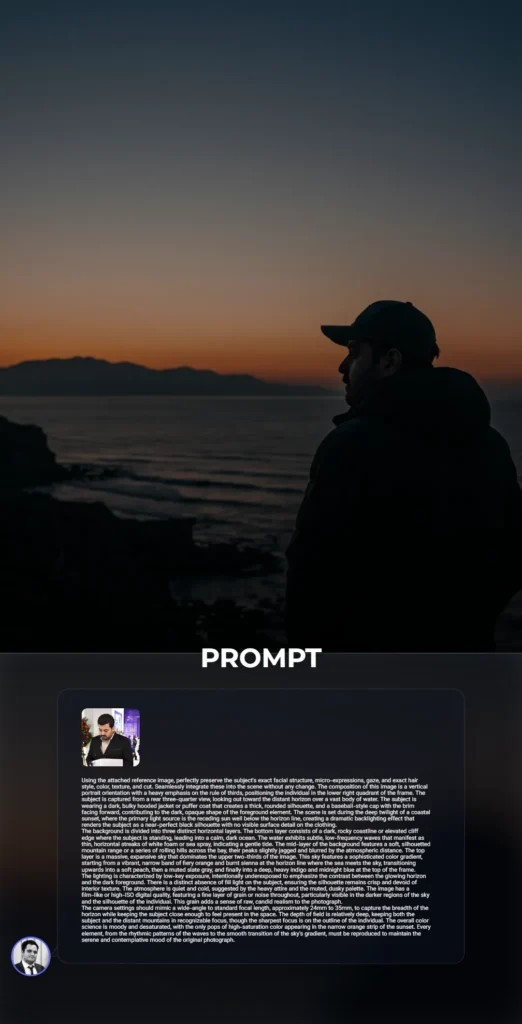
Moody Twilight Silhouette Coastal Portrait PromptUsing the attached reference image, perfectly preserve the subject's exact facial structure, micro-expressions, gaze, and exact hair style, color, texture, and cut. Seamlessly integrate these into the scene without any change. The composition of this image is a vertical portrait orientation with a heavy emphasis on the rule of thirds, positioning the individual in the lower right quadrant of the frame. The subject is captured from a rear three-quarter view, looking out toward the distant horizon over a vast body of water. The subject is wearing a dark, bulky hooded jacket or puffer coat that creates a thick, rounded silhouette, and a baseball-style cap with the brim facing forward, contributing to the dark, opaque shape of the foreground element. The scene is set during the deep twilight of a coastal sunset, where the primary light source is the receding sun well below the horizon line, creating a dramatic backlighting effect that renders the subject as a near-perfect black silhouette with no visible surface detail on the clothing.
The background is divided into three distinct horizontal layers. The bottom layer consists of a dark, rocky coastline or elevated cliff edge where the subject is standing, leading into a calm, dark ocean. The water exhibits subtle, low-frequency waves that manifest as thin, horizontal streaks of white foam or sea spray, indicating a gentle tide. The mid-layer of the background features a soft, silhouetted mountain range or a series of rolling hills across the bay, their peaks slightly jagged and blurred by the atmospheric distance. The top layer is a massive, expansive sky that dominates the upper two-thirds of the image. This sky features a sophisticated color gradient, starting from a vibrant, narrow band of fiery orange and burnt sienna at the horizon line where the sea meets the sky, transitioning upwards into a soft peach, then a muted slate gray, and finally into a deep, heavy indigo and midnight blue at the top of the frame.
The lighting is characterized by low-key exposure, intentionally underexposed to emphasize the contrast between the glowing horizon and the dark foreground. There is a distinct absence of fill light on the subject, ensuring the silhouette remains crisp and devoid of interior texture. The atmosphere is quiet and cold, suggested by the heavy attire and the muted, dusky palette. The image has a film-like or high-ISO digital quality, featuring a fine layer of grain or noise throughout, particularly visible in the darker regions of the sky and the silhouette of the individual. This grain adds a sense of raw, candid realism to the photograph.
The camera settings should mimic a wide-angle to standard focal length, approximately 24mm to 35mm, to capture the breadth of the horizon while keeping the subject close enough to feel present in the space. The depth of field is relatively deep, keeping both the subject and the distant mountains in recognizable focus, though the sharpest focus is on the outline of the individual. The overall color science is moody and desaturated, with the only pops of high-saturation color appearing in the narrow orange strip of the sunset. Every element, from the rhythmic patterns of the waves to the smooth transition of the sky's gradient, must be reproduced to maintain the serene and contemplative mood of the original photograph.
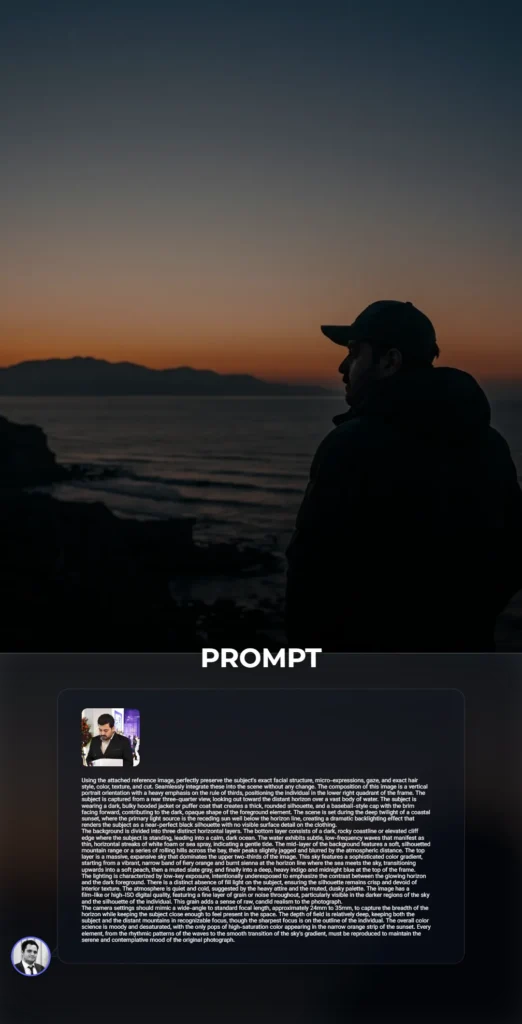
Moody Twilight Silhouette Coastal Portrait PromptUsing the attached reference image, perfectly preserve the subject's exact facial structure, micro-expressions, gaze, and exact hair style, color, texture, and cut. Seamlessly integrate these into the scene without any change. The composition of this image is a vertical portrait orientation with a heavy emphasis on the rule of thirds, positioning the individual in the lower right quadrant of the frame. The subject is captured from a rear three-quarter view, looking out toward the distant horizon over a vast body of water. The subject is wearing a dark, bulky hooded jacket or puffer coat that creates a thick, rounded silhouette, and a baseball-style cap with the brim facing forward, contributing to the dark, opaque shape of the foreground element. The scene is set during the deep twilight of a coastal sunset, where the primary light source is the receding sun well below the horizon line, creating a dramatic backlighting effect that renders the subject as a near-perfect black silhouette with no visible surface detail on the clothing.
The background is divided into three distinct horizontal layers. The bottom layer consists of a dark, rocky coastline or elevated cliff edge where the subject is standing, leading into a calm, dark ocean. The water exhibits subtle, low-frequency waves that manifest as thin, horizontal streaks of white foam or sea spray, indicating a gentle tide. The mid-layer of the background features a soft, silhouetted mountain range or a series of rolling hills across the bay, their peaks slightly jagged and blurred by the atmospheric distance. The top layer is a massive, expansive sky that dominates the upper two-thirds of the image. This sky features a sophisticated color gradient, starting from a vibrant, narrow band of fiery orange and burnt sienna at the horizon line where the sea meets the sky, transitioning upwards into a soft peach, then a muted slate gray, and finally into a deep, heavy indigo and midnight blue at the top of the frame.
The lighting is characterized by low-key exposure, intentionally underexposed to emphasize the contrast between the glowing horizon and the dark foreground. There is a distinct absence of fill light on the subject, ensuring the silhouette remains crisp and devoid of interior texture. The atmosphere is quiet and cold, suggested by the heavy attire and the muted, dusky palette. The image has a film-like or high-ISO digital quality, featuring a fine layer of grain or noise throughout, particularly visible in the darker regions of the sky and the silhouette of the individual. This grain adds a sense of raw, candid realism to the photograph.
The camera settings should mimic a wide-angle to standard focal length, approximately 24mm to 35mm, to capture the breadth of the horizon while keeping the subject close enough to feel present in the space. The depth of field is relatively deep, keeping both the subject and the distant mountains in recognizable focus, though the sharpest focus is on the outline of the individual. The overall color science is moody and desaturated, with the only pops of high-saturation color appearing in the narrow orange strip of the sunset. Every element, from the rhythmic patterns of the waves to the smooth transition of the sky's gradient, must be reproduced to maintain the serene and contemplative mood of the original photograph.