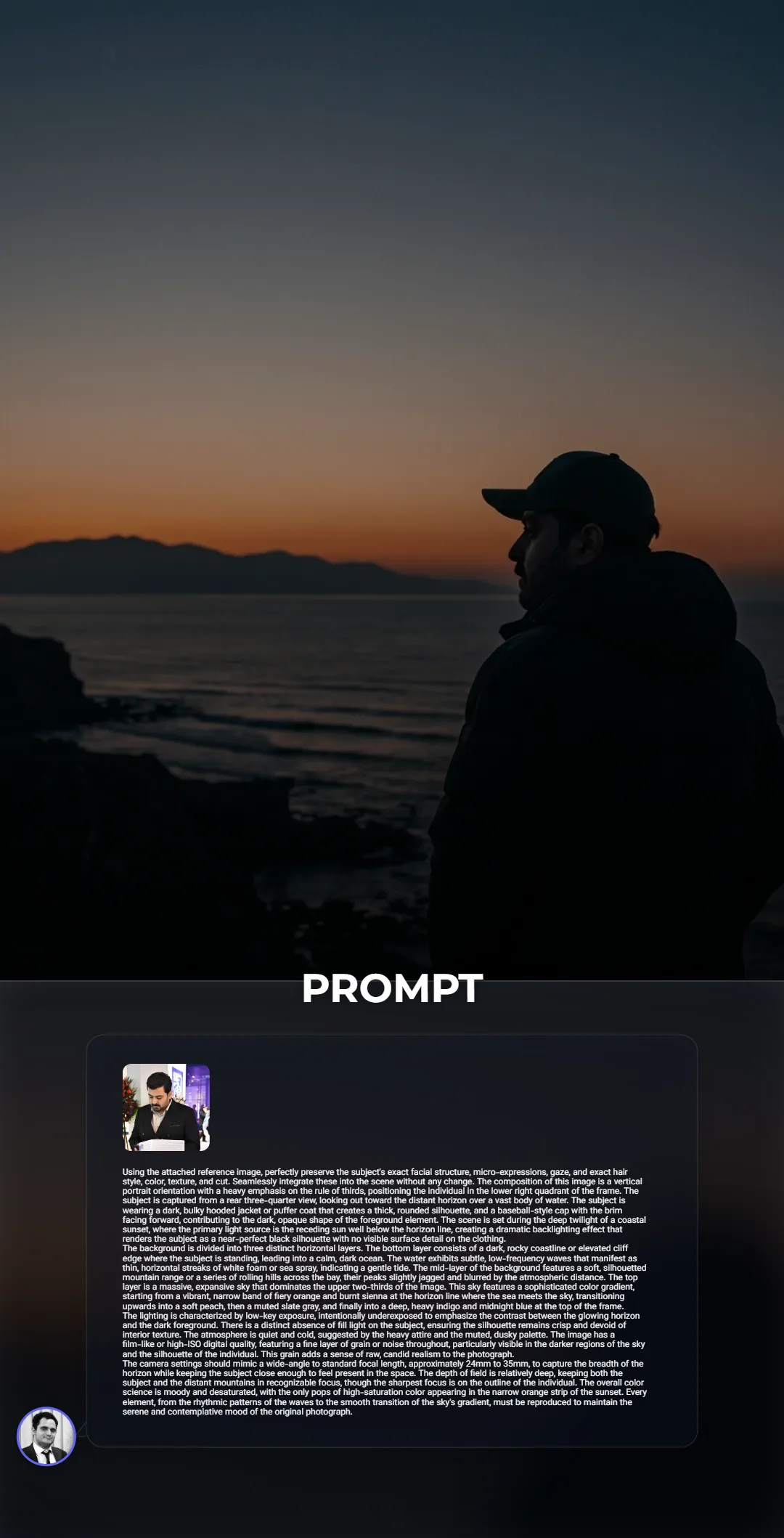
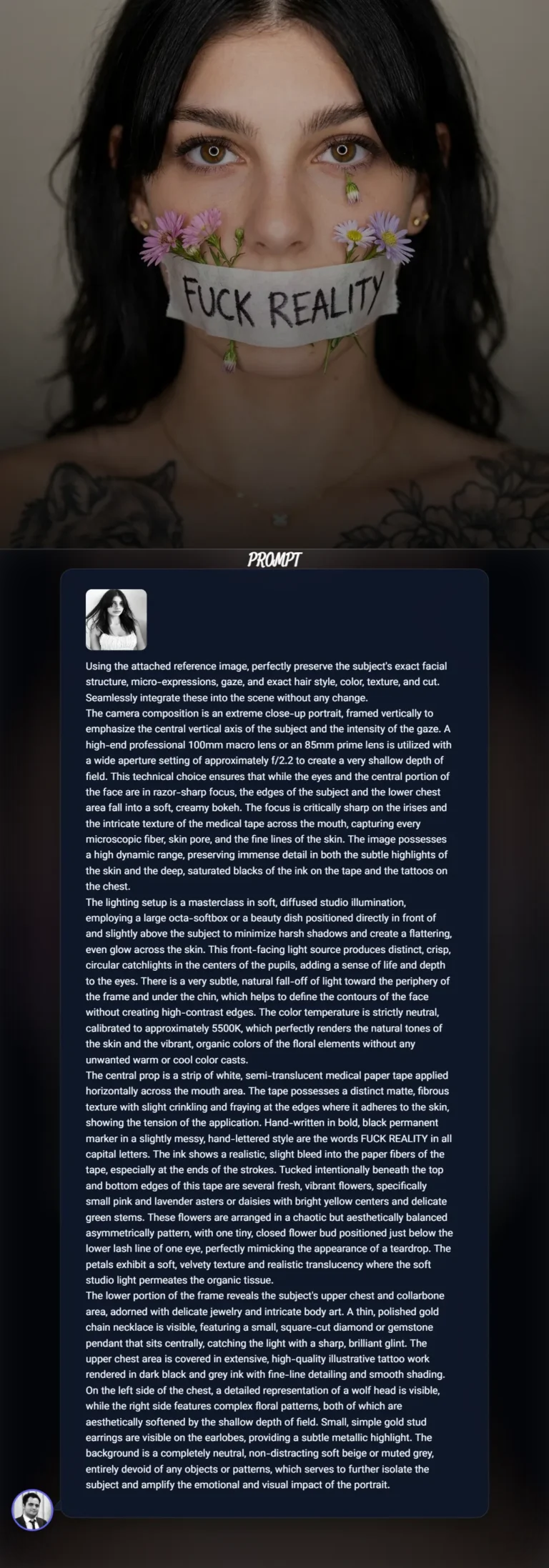
Moody Twilight Silhouette Coastal Portrait PromptUsing the attached reference image, perfectly preserve the subject's exact facial structure, micro-expressions, gaze, and exact hair style, color, texture, and cut. Seamlessly integrate these into the scene without any change. The composition of this image is a vertical portrait orientation with a heavy emphasis on the rule of thirds, positioning the individual in the lower right quadrant of the frame. The subject is captured from a rear three-quarter view, looking out toward the distant horizon over a vast body of water. The subject is wearing a dark, bulky hooded jacket or puffer coat that creates a thick, rounded silhouette, and a baseball-style cap with the brim facing forward, contributing to the dark, opaque shape of the foreground element. The scene is set during the deep twilight of a coastal sunset, where the primary light source is the receding sun well below the horizon line, creating a dramatic backlighting effect that renders the subject as a near-perfect black silhouette with no visible surface detail on the clothing.
The background is divided into three distinct horizontal layers. The bottom layer consists of a dark, rocky coastline or elevated cliff edge where the subject is standing, leading into a calm, dark ocean. The water exhibits subtle, low-frequency waves that manifest as thin, horizontal streaks of white foam or sea spray, indicating a gentle tide. The mid-layer of the background features a soft, silhouetted mountain range or a series of rolling hills across the bay, their peaks slightly jagged and blurred by the atmospheric distance. The top layer is a massive, expansive sky that dominates the upper two-thirds of the image. This sky features a sophisticated color gradient, starting from a vibrant, narrow band of fiery orange and burnt sienna at the horizon line where the sea meets the sky, transitioning upwards into a soft peach, then a muted slate gray, and finally into a deep, heavy indigo and midnight blue at the top of the frame.
The lighting is characterized by low-key exposure, intentionally underexposed to emphasize the contrast between the glowing horizon and the dark foreground. There is a distinct absence of fill light on the subject, ensuring the silhouette remains crisp and devoid of interior texture. The atmosphere is quiet and cold, suggested by the heavy attire and the muted, dusky palette. The image has a film-like or high-ISO digital quality, featuring a fine layer of grain or noise throughout, particularly visible in the darker regions of the sky and the silhouette of the individual. This grain adds a sense of raw, candid realism to the photograph.
The camera settings should mimic a wide-angle to standard focal length, approximately 24mm to 35mm, to capture the breadth of the horizon while keeping the subject close enough to feel present in the space. The depth of field is relatively deep, keeping both the subject and the distant mountains in recognizable focus, though the sharpest focus is on the outline of the individual. The overall color science is moody and desaturated, with the only pops of high-saturation color appearing in the narrow orange strip of the sunset. Every element, from the rhythmic patterns of the waves to the smooth transition of the sky's gradient, must be reproduced to maintain the serene and contemplative mood of the original photograph.

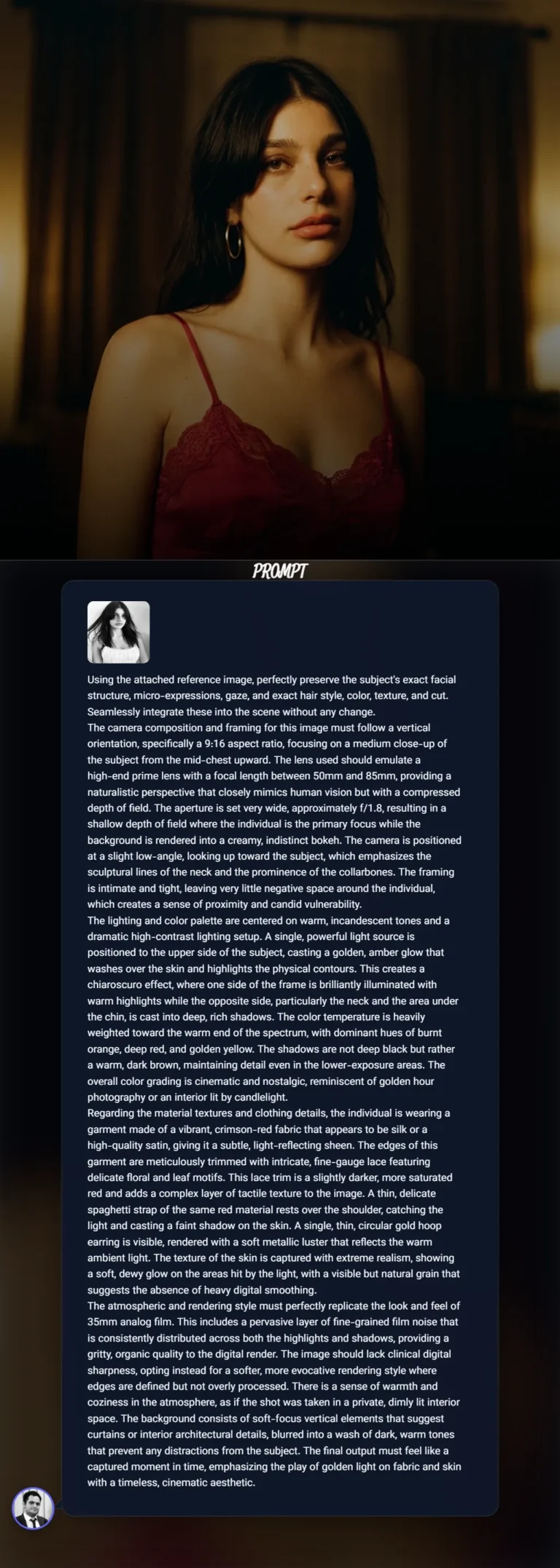
Cinematic Twilight Subject Silhouette Against Expansive Golden HorizonUsing the attached reference image, perfectly preserve the subject's exact facial structure, micro-expressions, gaze, and exact hair style, color, texture, and cut. Seamlessly integrate these into the scene without any change. The composition of the image is a vertical-oriented portrait that places the subject in the lower center of the frame, creating a powerful sense of scale against an expansive sky. The camera is positioned at a medium-low angle, looking slightly upward at the subject who is viewed from the back and slightly from the side. This perspective emphasizes the height of the individual while giving the sky a monumental presence. The framing follows a rule-of-thirds approach horizontally, but vertically, the sky occupies nearly two-thirds of the image, emphasizing a feeling of openness and contemplation.
The lighting is a masterclass in naturalistic twilight and golden hour cinematography. A vibrant, warm light source is positioned low on the horizon, obscured by a soft layer of atmospheric haze and distant trees. This creates a brilliant gradient of color, starting from a deep, desaturated charcoal and slate blue at the top of the frame, transitioning through a muted lavender-grey, and finally bursting into a saturated orange, amber, and golden-yellow glow at the horizon line. This backlighting creates a subtle rim-light effect along the edges of the subject's shoulders and the brim of the cap. The subject itself is largely in shadow, creating a soft silhouette that maintains detail in the fabric of the clothing while keeping the skin tones deep and underexposed.
The clothing worn by the subject provides essential textural contrast. The shirt is a bright white, short-sleeved garment with a distinct vertical rib-knit or piqué texture. The lighting catches the raised ridges of the fabric on the upper back and shoulders, creating micro-shadows that define the garment's structure. The fit is relaxed but clean. On the head, the subject wears a classic baseball cap in a deep, matte black color. The material of the cap appears to be a heavy cotton twill, with the light catching only the very edge of the brim and the side profile. The textures of the landscape in the background are equally detailed; on the right, tall, wispy meadow grasses catch the light at their tips, while on the left, more varied tropical foliage and shrubbery are visible as dark, soft-edged silhouettes.
The background environment is a rural or wild field at dusk. The ground in the immediate foreground consists of dark, uneven earth mixed with low-lying weeds and patches of grass. The mid-ground features a dense, layered treeline that acts as a silhouette against the glowing horizon. The trees are varied in height and shape, suggesting a natural, unmanicured landscape. The sky is not clear but filled with a thin, high-altitude cloud cover that diffuses the sunlight, creating a textured, painterly look to the color gradients. There is a perceptible film grain or digital noise throughout the image, particularly in the darker areas of the sky and the shadowed portions of the subject, which adds a tactile, gritty, and nostalgic quality to the overall aesthetic.
Technical camera features include a wide-angle to standard focal length, likely between 28mm and 35mm, which allows for the wide field of view and the dramatic sky. The aperture is set to a medium-wide value, perhaps around f/2.8 or f/4.0, providing a shallow enough depth of field to keep the subject's back and clothing in crisp detail while the distant foliage and the sky elements have a gentle, natural blur. The exposure is deliberately set for the highlights of the sunset, resulting in a low-key image with deep shadows. The color balance is skewed towards a naturalistic but moody palette, contrasting the cool tones of the upper atmosphere with the intense warmth of the setting sun. The final rendering should possess a high level of micro-contrast in the fabric textures while maintaining the soft, atmospheric quality of the light-filled horizon.
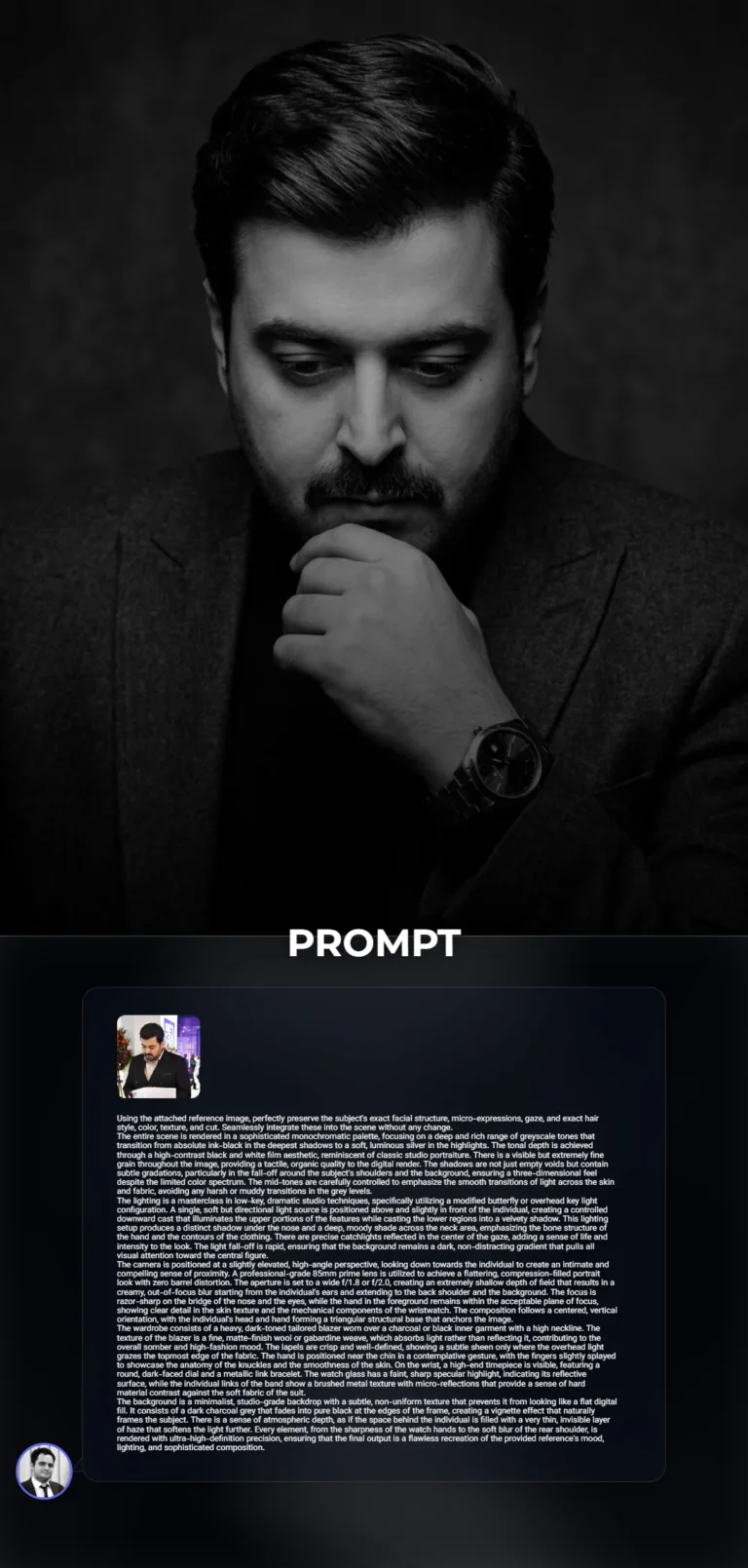
Professional Monochromatic Studio Portrait Prompt for High-End Cinematic Reference Face PreservationUsing the attached reference image, perfectly preserve the subject's exact facial structure, micro-expressions, gaze, and exact hair style, color, texture, and cut. Seamlessly integrate these into the scene without any change.
The entire scene is rendered in a sophisticated monochromatic palette, focusing on a deep and rich range of greyscale tones that transition from absolute ink-black in the deepest shadows to a soft, luminous silver in the highlights. The tonal depth is achieved through a high-contrast black and white film aesthetic, reminiscent of classic studio portraiture. There is a visible but extremely fine grain throughout the image, providing a tactile, organic quality to the digital render. The shadows are not just empty voids but contain subtle gradations, particularly in the fall-off around the subject's shoulders and the background, ensuring a three-dimensional feel despite the limited color spectrum. The mid-tones are carefully controlled to emphasize the smooth transitions of light across the skin and fabric, avoiding any harsh or muddy transitions in the grey levels.
The lighting is a masterclass in low-key, dramatic studio techniques, specifically utilizing a modified butterfly or overhead key light configuration. A single, soft but directional light source is positioned above and slightly in front of the individual, creating a controlled downward cast that illuminates the upper portions of the features while casting the lower regions into a velvety shadow. This lighting setup produces a distinct shadow under the nose and a deep, moody shade across the neck area, emphasizing the bone structure of the hand and the contours of the clothing. There are precise catchlights reflected in the center of the gaze, adding a sense of life and intensity to the look. The light fall-off is rapid, ensuring that the background remains a dark, non-distracting gradient that pulls all visual attention toward the central figure.
The camera is positioned at a slightly elevated, high-angle perspective, looking down towards the individual to create an intimate and compelling sense of proximity. A professional-grade 85mm prime lens is utilized to achieve a flattering, compression-filled portrait look with zero barrel distortion. The aperture is set to a wide f/1.8 or f/2.0, creating an extremely shallow depth of field that results in a creamy, out-of-focus blur starting from the individual's ears and extending to the back shoulder and the background. The focus is razor-sharp on the bridge of the nose and the eyes, while the hand in the foreground remains within the acceptable plane of focus, showing clear detail in the skin texture and the mechanical components of the wristwatch. The composition follows a centered, vertical orientation, with the individual's head and hand forming a triangular structural base that anchors the image.
The wardrobe consists of a heavy, dark-toned tailored blazer worn over a charcoal or black inner garment with a high neckline. The texture of the blazer is a fine, matte-finish wool or gabardine weave, which absorbs light rather than reflecting it, contributing to the overall somber and high-fashion mood. The lapels are crisp and well-defined, showing a subtle sheen only where the overhead light grazes the topmost edge of the fabric. The hand is positioned near the chin in a contemplative gesture, with the fingers slightly splayed to showcase the anatomy of the knuckles and the smoothness of the skin. On the wrist, a high-end timepiece is visible, featuring a round, dark-faced dial and a metallic link bracelet. The watch glass has a faint, sharp specular highlight, indicating its reflective surface, while the individual links of the band show a brushed metal texture with micro-reflections that provide a sense of hard material contrast against the soft fabric of the suit.
The background is a minimalist, studio-grade backdrop with a subtle, non-uniform texture that prevents it from looking like a flat digital fill. It consists of a dark charcoal grey that fades into pure black at the edges of the frame, creating a vignette effect that naturally frames the subject. There is a sense of atmospheric depth, as if the space behind the individual is filled with a very thin, invisible layer of haze that softens the light further. Every element, from the sharpness of the watch hands to the soft blur of the rear shoulder, is rendered with ultra-high-definition precision, ensuring that the final output is a flawless recreation of the provided reference's mood, lighting, and sophisticated composition.
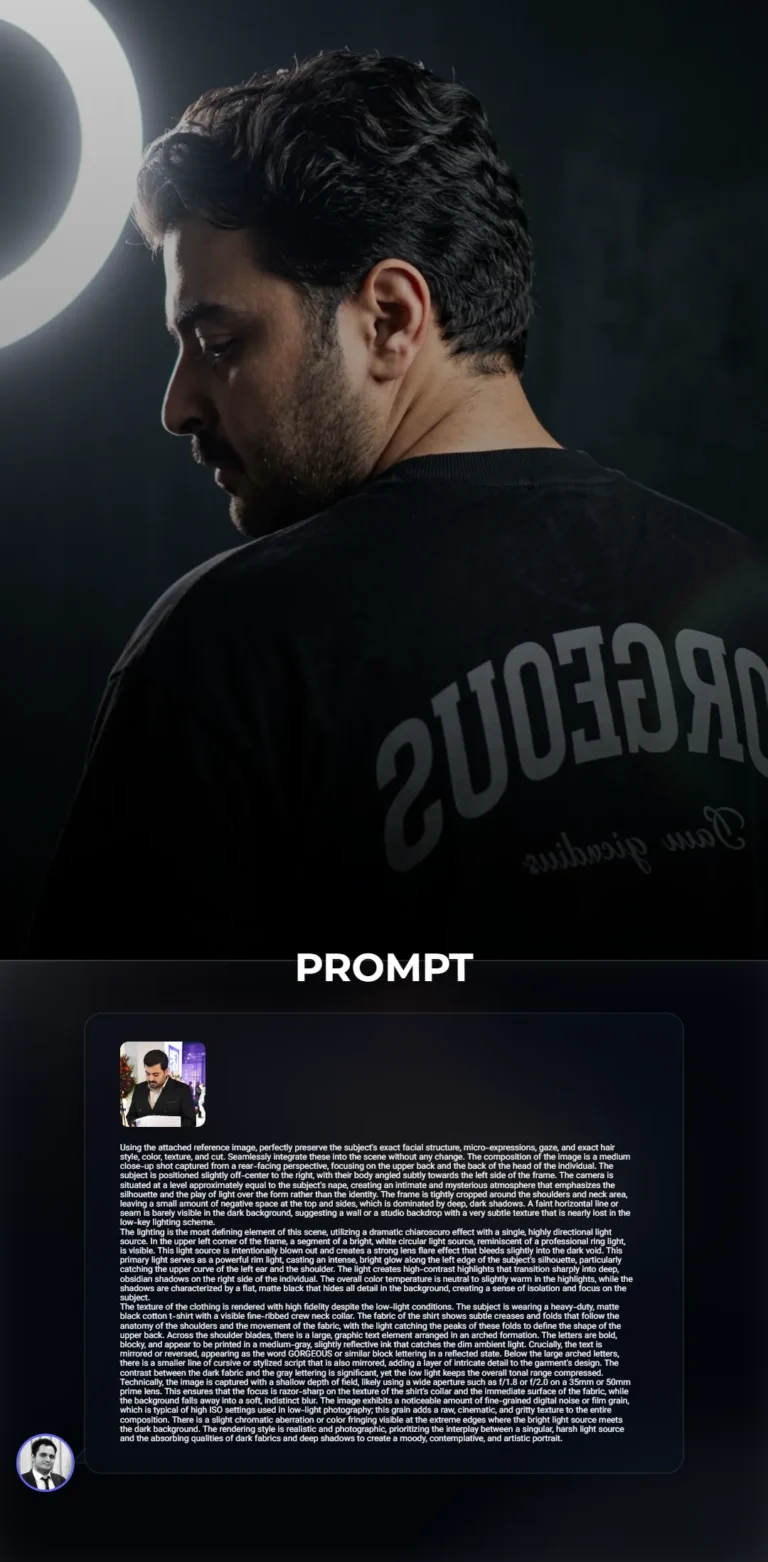
Cinematic Chiaroscuro Rear Portrait with Mirrored Graphic TextUsing the attached reference image, perfectly preserve the subject's exact facial structure, micro-expressions, gaze, and exact hair style, color, texture, and cut. Seamlessly integrate these into the scene without any change. The composition of the image is a medium close-up shot captured from a rear-facing perspective, focusing on the upper back and the back of the head of the individual. The subject is positioned slightly off-center to the right, with their body angled subtly towards the left side of the frame. The camera is situated at a level approximately equal to the subject's nape, creating an intimate and mysterious atmosphere that emphasizes the silhouette and the play of light over the form rather than the identity. The frame is tightly cropped around the shoulders and neck area, leaving a small amount of negative space at the top and sides, which is dominated by deep, dark shadows. A faint horizontal line or seam is barely visible in the dark background, suggesting a wall or a studio backdrop with a very subtle texture that is nearly lost in the low-key lighting scheme.
The lighting is the most defining element of this scene, utilizing a dramatic chiaroscuro effect with a single, highly directional light source. In the upper left corner of the frame, a segment of a bright, white circular light source, reminiscent of a professional ring light, is visible. This light source is intentionally blown out and creates a strong lens flare effect that bleeds slightly into the dark void. This primary light serves as a powerful rim light, casting an intense, bright glow along the left edge of the subject's silhouette, particularly catching the upper curve of the left ear and the shoulder. The light creates high-contrast highlights that transition sharply into deep, obsidian shadows on the right side of the individual. The overall color temperature is neutral to slightly warm in the highlights, while the shadows are characterized by a flat, matte black that hides all detail in the background, creating a sense of isolation and focus on the subject.
The texture of the clothing is rendered with high fidelity despite the low-light conditions. The subject is wearing a heavy-duty, matte black cotton t-shirt with a visible fine-ribbed crew neck collar. The fabric of the shirt shows subtle creases and folds that follow the anatomy of the shoulders and the movement of the fabric, with the light catching the peaks of these folds to define the shape of the upper back. Across the shoulder blades, there is a large, graphic text element arranged in an arched formation. The letters are bold, blocky, and appear to be printed in a medium-gray, slightly reflective ink that catches the dim ambient light. Crucially, the text is mirrored or reversed, appearing as the word GORGEOUS or similar block lettering in a reflected state. Below the large arched letters, there is a smaller line of cursive or stylized script that is also mirrored, adding a layer of intricate detail to the garment's design. The contrast between the dark fabric and the gray lettering is significant, yet the low light keeps the overall tonal range compressed.
Technically, the image is captured with a shallow depth of field, likely using a wide aperture such as f/1.8 or f/2.0 on a 35mm or 50mm prime lens. This ensures that the focus is razor-sharp on the texture of the shirt's collar and the immediate surface of the fabric, while the background falls away into a soft, indistinct blur. The image exhibits a noticeable amount of fine-grained digital noise or film grain, which is typical of high ISO settings used in low-light photography; this grain adds a raw, cinematic, and gritty texture to the entire composition. There is a slight chromatic aberration or color fringing visible at the extreme edges where the bright light source meets the dark background. The rendering style is realistic and photographic, prioritizing the interplay between a singular, harsh light source and the absorbing qualities of dark fabrics and deep shadows to create a moody, contemplative, and artistic portrait.

Professional Monochromatic Studio Portrait Prompt for High-End Cinematic Reference Face PreservationUsing the attached reference image, perfectly preserve the subject's exact facial structure, micro-expressions, gaze, and exact hair style, color, texture, and cut. Seamlessly integrate these into the scene without any change.
The entire scene is rendered in a sophisticated monochromatic palette, focusing on a deep and rich range of greyscale tones that transition from absolute ink-black in the deepest shadows to a soft, luminous silver in the highlights. The tonal depth is achieved through a high-contrast black and white film aesthetic, reminiscent of classic studio portraiture. There is a visible but extremely fine grain throughout the image, providing a tactile, organic quality to the digital render. The shadows are not just empty voids but contain subtle gradations, particularly in the fall-off around the subject's shoulders and the background, ensuring a three-dimensional feel despite the limited color spectrum. The mid-tones are carefully controlled to emphasize the smooth transitions of light across the skin and fabric, avoiding any harsh or muddy transitions in the grey levels.
The lighting is a masterclass in low-key, dramatic studio techniques, specifically utilizing a modified butterfly or overhead key light configuration. A single, soft but directional light source is positioned above and slightly in front of the individual, creating a controlled downward cast that illuminates the upper portions of the features while casting the lower regions into a velvety shadow. This lighting setup produces a distinct shadow under the nose and a deep, moody shade across the neck area, emphasizing the bone structure of the hand and the contours of the clothing. There are precise catchlights reflected in the center of the gaze, adding a sense of life and intensity to the look. The light fall-off is rapid, ensuring that the background remains a dark, non-distracting gradient that pulls all visual attention toward the central figure.
The camera is positioned at a slightly elevated, high-angle perspective, looking down towards the individual to create an intimate and compelling sense of proximity. A professional-grade 85mm prime lens is utilized to achieve a flattering, compression-filled portrait look with zero barrel distortion. The aperture is set to a wide f/1.8 or f/2.0, creating an extremely shallow depth of field that results in a creamy, out-of-focus blur starting from the individual's ears and extending to the back shoulder and the background. The focus is razor-sharp on the bridge of the nose and the eyes, while the hand in the foreground remains within the acceptable plane of focus, showing clear detail in the skin texture and the mechanical components of the wristwatch. The composition follows a centered, vertical orientation, with the individual's head and hand forming a triangular structural base that anchors the image.
The wardrobe consists of a heavy, dark-toned tailored blazer worn over a charcoal or black inner garment with a high neckline. The texture of the blazer is a fine, matte-finish wool or gabardine weave, which absorbs light rather than reflecting it, contributing to the overall somber and high-fashion mood. The lapels are crisp and well-defined, showing a subtle sheen only where the overhead light grazes the topmost edge of the fabric. The hand is positioned near the chin in a contemplative gesture, with the fingers slightly splayed to showcase the anatomy of the knuckles and the smoothness of the skin. On the wrist, a high-end timepiece is visible, featuring a round, dark-faced dial and a metallic link bracelet. The watch glass has a faint, sharp specular highlight, indicating its reflective surface, while the individual links of the band show a brushed metal texture with micro-reflections that provide a sense of hard material contrast against the soft fabric of the suit.
The background is a minimalist, studio-grade backdrop with a subtle, non-uniform texture that prevents it from looking like a flat digital fill. It consists of a dark charcoal grey that fades into pure black at the edges of the frame, creating a vignette effect that naturally frames the subject. There is a sense of atmospheric depth, as if the space behind the individual is filled with a very thin, invisible layer of haze that softens the light further. Every element, from the sharpness of the watch hands to the soft blur of the rear shoulder, is rendered with ultra-high-definition precision, ensuring that the final output is a flawless recreation of the provided reference's mood, lighting, and sophisticated composition.
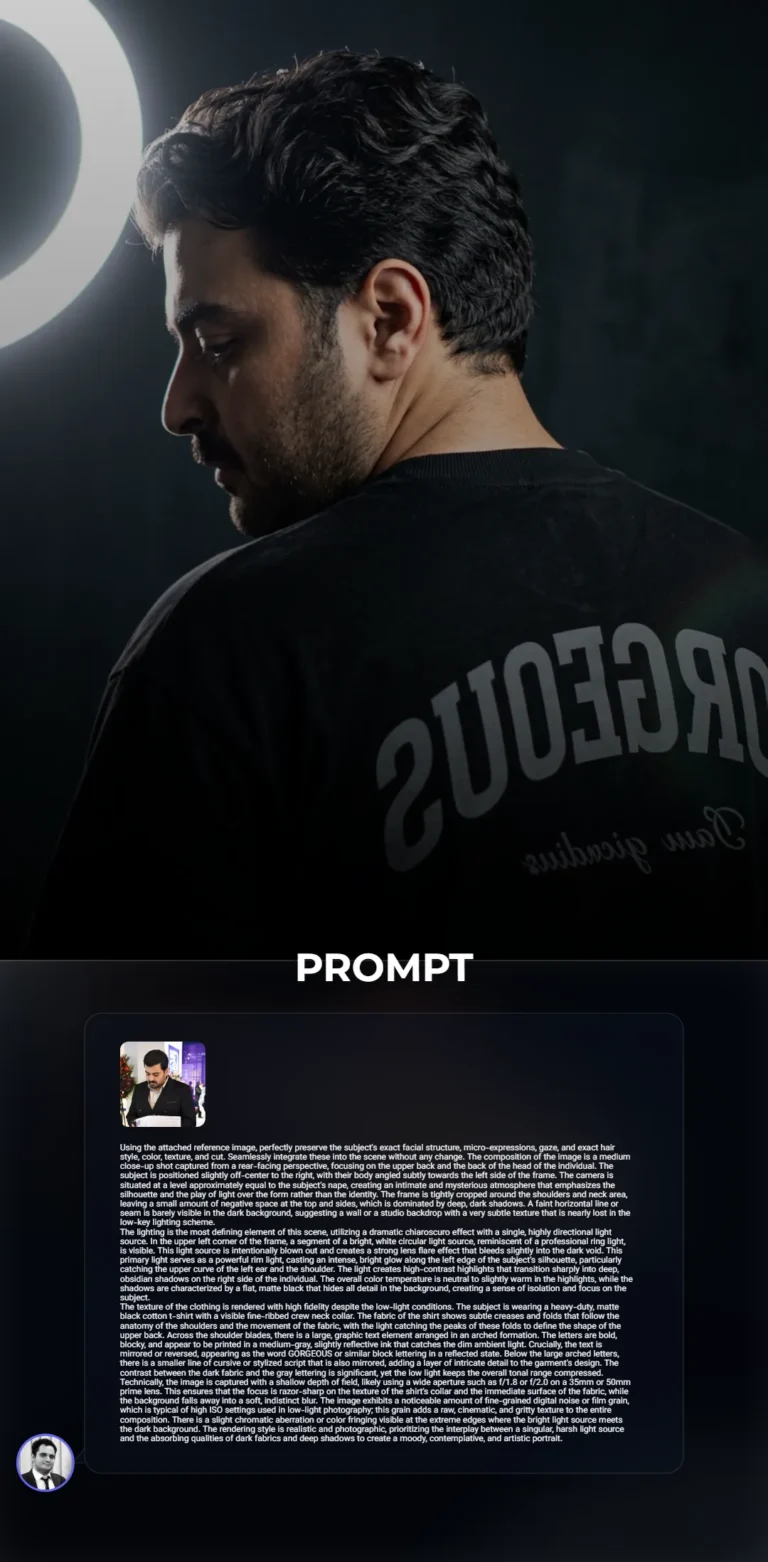
Cinematic Chiaroscuro Rear Portrait with Mirrored Graphic TextUsing the attached reference image, perfectly preserve the subject's exact facial structure, micro-expressions, gaze, and exact hair style, color, texture, and cut. Seamlessly integrate these into the scene without any change. The composition of the image is a medium close-up shot captured from a rear-facing perspective, focusing on the upper back and the back of the head of the individual. The subject is positioned slightly off-center to the right, with their body angled subtly towards the left side of the frame. The camera is situated at a level approximately equal to the subject's nape, creating an intimate and mysterious atmosphere that emphasizes the silhouette and the play of light over the form rather than the identity. The frame is tightly cropped around the shoulders and neck area, leaving a small amount of negative space at the top and sides, which is dominated by deep, dark shadows. A faint horizontal line or seam is barely visible in the dark background, suggesting a wall or a studio backdrop with a very subtle texture that is nearly lost in the low-key lighting scheme.
The lighting is the most defining element of this scene, utilizing a dramatic chiaroscuro effect with a single, highly directional light source. In the upper left corner of the frame, a segment of a bright, white circular light source, reminiscent of a professional ring light, is visible. This light source is intentionally blown out and creates a strong lens flare effect that bleeds slightly into the dark void. This primary light serves as a powerful rim light, casting an intense, bright glow along the left edge of the subject's silhouette, particularly catching the upper curve of the left ear and the shoulder. The light creates high-contrast highlights that transition sharply into deep, obsidian shadows on the right side of the individual. The overall color temperature is neutral to slightly warm in the highlights, while the shadows are characterized by a flat, matte black that hides all detail in the background, creating a sense of isolation and focus on the subject.
The texture of the clothing is rendered with high fidelity despite the low-light conditions. The subject is wearing a heavy-duty, matte black cotton t-shirt with a visible fine-ribbed crew neck collar. The fabric of the shirt shows subtle creases and folds that follow the anatomy of the shoulders and the movement of the fabric, with the light catching the peaks of these folds to define the shape of the upper back. Across the shoulder blades, there is a large, graphic text element arranged in an arched formation. The letters are bold, blocky, and appear to be printed in a medium-gray, slightly reflective ink that catches the dim ambient light. Crucially, the text is mirrored or reversed, appearing as the word GORGEOUS or similar block lettering in a reflected state. Below the large arched letters, there is a smaller line of cursive or stylized script that is also mirrored, adding a layer of intricate detail to the garment's design. The contrast between the dark fabric and the gray lettering is significant, yet the low light keeps the overall tonal range compressed.
Technically, the image is captured with a shallow depth of field, likely using a wide aperture such as f/1.8 or f/2.0 on a 35mm or 50mm prime lens. This ensures that the focus is razor-sharp on the texture of the shirt's collar and the immediate surface of the fabric, while the background falls away into a soft, indistinct blur. The image exhibits a noticeable amount of fine-grained digital noise or film grain, which is typical of high ISO settings used in low-light photography; this grain adds a raw, cinematic, and gritty texture to the entire composition. There is a slight chromatic aberration or color fringing visible at the extreme edges where the bright light source meets the dark background. The rendering style is realistic and photographic, prioritizing the interplay between a singular, harsh light source and the absorbing qualities of dark fabrics and deep shadows to create a moody, contemplative, and artistic portrait.
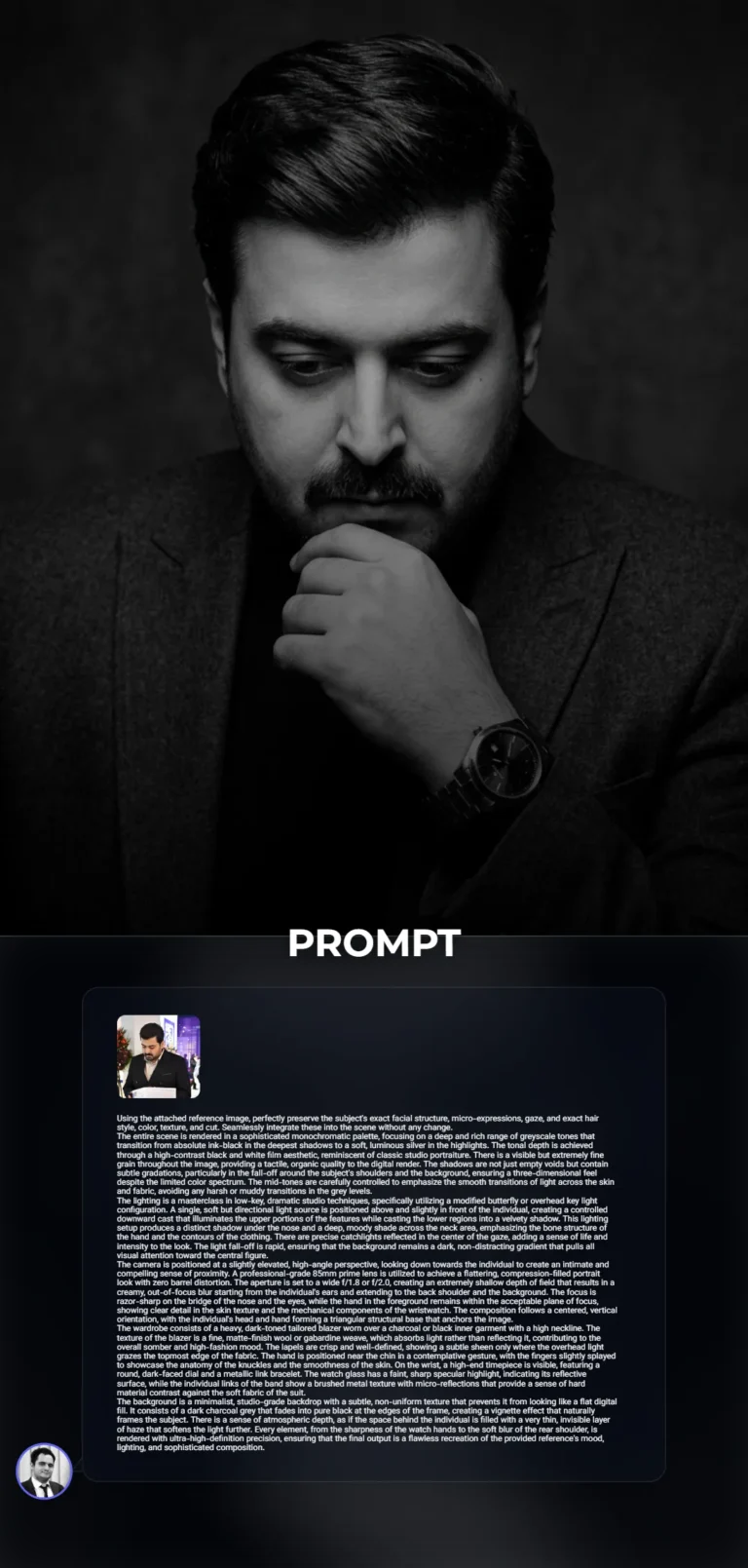
Professional Monochromatic Studio Portrait Prompt for High-End Cinematic Reference Face PreservationUsing the attached reference image, perfectly preserve the subject's exact facial structure, micro-expressions, gaze, and exact hair style, color, texture, and cut. Seamlessly integrate these into the scene without any change.
The entire scene is rendered in a sophisticated monochromatic palette, focusing on a deep and rich range of greyscale tones that transition from absolute ink-black in the deepest shadows to a soft, luminous silver in the highlights. The tonal depth is achieved through a high-contrast black and white film aesthetic, reminiscent of classic studio portraiture. There is a visible but extremely fine grain throughout the image, providing a tactile, organic quality to the digital render. The shadows are not just empty voids but contain subtle gradations, particularly in the fall-off around the subject's shoulders and the background, ensuring a three-dimensional feel despite the limited color spectrum. The mid-tones are carefully controlled to emphasize the smooth transitions of light across the skin and fabric, avoiding any harsh or muddy transitions in the grey levels.
The lighting is a masterclass in low-key, dramatic studio techniques, specifically utilizing a modified butterfly or overhead key light configuration. A single, soft but directional light source is positioned above and slightly in front of the individual, creating a controlled downward cast that illuminates the upper portions of the features while casting the lower regions into a velvety shadow. This lighting setup produces a distinct shadow under the nose and a deep, moody shade across the neck area, emphasizing the bone structure of the hand and the contours of the clothing. There are precise catchlights reflected in the center of the gaze, adding a sense of life and intensity to the look. The light fall-off is rapid, ensuring that the background remains a dark, non-distracting gradient that pulls all visual attention toward the central figure.
The camera is positioned at a slightly elevated, high-angle perspective, looking down towards the individual to create an intimate and compelling sense of proximity. A professional-grade 85mm prime lens is utilized to achieve a flattering, compression-filled portrait look with zero barrel distortion. The aperture is set to a wide f/1.8 or f/2.0, creating an extremely shallow depth of field that results in a creamy, out-of-focus blur starting from the individual's ears and extending to the back shoulder and the background. The focus is razor-sharp on the bridge of the nose and the eyes, while the hand in the foreground remains within the acceptable plane of focus, showing clear detail in the skin texture and the mechanical components of the wristwatch. The composition follows a centered, vertical orientation, with the individual's head and hand forming a triangular structural base that anchors the image.
The wardrobe consists of a heavy, dark-toned tailored blazer worn over a charcoal or black inner garment with a high neckline. The texture of the blazer is a fine, matte-finish wool or gabardine weave, which absorbs light rather than reflecting it, contributing to the overall somber and high-fashion mood. The lapels are crisp and well-defined, showing a subtle sheen only where the overhead light grazes the topmost edge of the fabric. The hand is positioned near the chin in a contemplative gesture, with the fingers slightly splayed to showcase the anatomy of the knuckles and the smoothness of the skin. On the wrist, a high-end timepiece is visible, featuring a round, dark-faced dial and a metallic link bracelet. The watch glass has a faint, sharp specular highlight, indicating its reflective surface, while the individual links of the band show a brushed metal texture with micro-reflections that provide a sense of hard material contrast against the soft fabric of the suit.
The background is a minimalist, studio-grade backdrop with a subtle, non-uniform texture that prevents it from looking like a flat digital fill. It consists of a dark charcoal grey that fades into pure black at the edges of the frame, creating a vignette effect that naturally frames the subject. There is a sense of atmospheric depth, as if the space behind the individual is filled with a very thin, invisible layer of haze that softens the light further. Every element, from the sharpness of the watch hands to the soft blur of the rear shoulder, is rendered with ultra-high-definition precision, ensuring that the final output is a flawless recreation of the provided reference's mood, lighting, and sophisticated composition.

Cinematic Chiaroscuro Rear Portrait with Mirrored Graphic TextUsing the attached reference image, perfectly preserve the subject's exact facial structure, micro-expressions, gaze, and exact hair style, color, texture, and cut. Seamlessly integrate these into the scene without any change. The composition of the image is a medium close-up shot captured from a rear-facing perspective, focusing on the upper back and the back of the head of the individual. The subject is positioned slightly off-center to the right, with their body angled subtly towards the left side of the frame. The camera is situated at a level approximately equal to the subject's nape, creating an intimate and mysterious atmosphere that emphasizes the silhouette and the play of light over the form rather than the identity. The frame is tightly cropped around the shoulders and neck area, leaving a small amount of negative space at the top and sides, which is dominated by deep, dark shadows. A faint horizontal line or seam is barely visible in the dark background, suggesting a wall or a studio backdrop with a very subtle texture that is nearly lost in the low-key lighting scheme.
The lighting is the most defining element of this scene, utilizing a dramatic chiaroscuro effect with a single, highly directional light source. In the upper left corner of the frame, a segment of a bright, white circular light source, reminiscent of a professional ring light, is visible. This light source is intentionally blown out and creates a strong lens flare effect that bleeds slightly into the dark void. This primary light serves as a powerful rim light, casting an intense, bright glow along the left edge of the subject's silhouette, particularly catching the upper curve of the left ear and the shoulder. The light creates high-contrast highlights that transition sharply into deep, obsidian shadows on the right side of the individual. The overall color temperature is neutral to slightly warm in the highlights, while the shadows are characterized by a flat, matte black that hides all detail in the background, creating a sense of isolation and focus on the subject.
The texture of the clothing is rendered with high fidelity despite the low-light conditions. The subject is wearing a heavy-duty, matte black cotton t-shirt with a visible fine-ribbed crew neck collar. The fabric of the shirt shows subtle creases and folds that follow the anatomy of the shoulders and the movement of the fabric, with the light catching the peaks of these folds to define the shape of the upper back. Across the shoulder blades, there is a large, graphic text element arranged in an arched formation. The letters are bold, blocky, and appear to be printed in a medium-gray, slightly reflective ink that catches the dim ambient light. Crucially, the text is mirrored or reversed, appearing as the word GORGEOUS or similar block lettering in a reflected state. Below the large arched letters, there is a smaller line of cursive or stylized script that is also mirrored, adding a layer of intricate detail to the garment's design. The contrast between the dark fabric and the gray lettering is significant, yet the low light keeps the overall tonal range compressed.
Technically, the image is captured with a shallow depth of field, likely using a wide aperture such as f/1.8 or f/2.0 on a 35mm or 50mm prime lens. This ensures that the focus is razor-sharp on the texture of the shirt's collar and the immediate surface of the fabric, while the background falls away into a soft, indistinct blur. The image exhibits a noticeable amount of fine-grained digital noise or film grain, which is typical of high ISO settings used in low-light photography; this grain adds a raw, cinematic, and gritty texture to the entire composition. There is a slight chromatic aberration or color fringing visible at the extreme edges where the bright light source meets the dark background. The rendering style is realistic and photographic, prioritizing the interplay between a singular, harsh light source and the absorbing qualities of dark fabrics and deep shadows to create a moody, contemplative, and artistic portrait.

Cinematic B&W Documentary Portrait with ASVR Branding and Film GrainUsing the attached reference image, perfectly preserve the subject's exact facial structure, micro-expressions, gaze, and exact hair style, color, texture, and cut. Seamlessly integrate these into the scene without any change. The overall composition is a medium shot captured from a slightly low-angle perspective, looking up at the individual who is positioned in the center-left of the frame. One arm is raised toward the upper right corner, where the edge of a vehicle's trunk or hood is visible, creating a strong diagonal line that leads the eye through the image. The background is a minimalist, overexposed, and softly blurred expanse that suggests an open outdoor environment with bright, diffused light, providing no distracting elements and focusing all attention on the subject. The framing is tight, cutting off at the mid-torso, creating an intimate and candid documentary-style feel.
The lighting is characterized by a high-contrast, monochromatic film aesthetic with a strong directional light source emanating from above and slightly to the front. This creates deep, well-defined shadows beneath the brim of the hat, the nose, and the jawline, while highlighting the top surfaces of the shoulders and the crest of the hat. The tonal range is vast, moving from the deep blacks of the sunglasses and shadows to the bright, almost blown-out whites of the background and the highlights on the clothing. There is a distinct silver-gelatin print quality to the light, with a rich gradation of grays that provides a three-dimensional feel to the subject's form despite the two-tone nature of the black and white medium.
The textural details of the attire are rendered with extreme precision. The subject is wearing a light-colored, structured five-panel baseball cap made of a heavy-duty cotton twill or brushed canvas. On the front of the cap, the letters ASVR are embroidered in a dark, raised, heavy-thread serif font, with the words DOES IT stitched in a smaller, simpler typeface directly beneath. The brim of the hat shows fine, parallel stitching rows. The sunglasses are large, dark, and rectangular with a thick, polished acetate frame that exhibits subtle reflections of the surrounding environment on the lenses. The t-shirt is a classic crew neck made of a lightweight, slightly worn cotton jersey, showing soft creases, subtle pilling, and a delicate ribbed texture at the neckline. Hanging around the neck is a fine metallic ball-chain necklace with a small, oval-shaped religious or commemorative medal that catches the light with a sharp, metallic glint.
The camera and rendering style emulate high-speed black and white film photography, specifically resembling a 35mm film stock like Kodak Tri-X or Ilford HP5 pushed to a higher ISO. This results in a prominent, organic film grain that is visible throughout the image, especially in the mid-tones and shadows, giving the picture a gritty, tactile, and timeless quality. The lens used appears to be a 35mm or 50mm prime with a relatively wide aperture, perhaps f/2.8, which accounts for the sharp focus on the subject's torso and face while allowing the raised arm and the distant background to fall into a gentle, soft-focus blur. There is no digital sharpening; instead, the image possesses a natural micro-contrast and a smooth roll-off in the highlights, capturing a raw, unpolished moment with cinematic clarity and depth. The upper portion of the frame is occupied by the dark, metallic, and reflective underside of a vehicle component, showing mechanical details and chrome accents that are slightly out of focus, adding a sense of place and narrative context to the scene.

Cinematic Monochromatic Portrait: High-Contrast 85mm Professional Studio ShotUsing the attached reference image, perfectly preserve the subject's exact facial structure, micro-expressions, gaze, and exact hair style, color, texture, and cut. Seamlessly integrate these into the scene without any change.
The photographic composition is a tight, vertical portrait with a 9:16 aspect ratio, captured using a professional-grade 85mm prime lens to achieve a classic telephoto compression that flattens the features aesthetically while maintaining a deep sense of intimacy. The camera is positioned at a slight downward angle, looking into the subject who is leaning forward with arms crossed and resting on an invisible surface in the foreground. The depth of field is meticulously controlled at an aperture of f/2.8, ensuring the focal plane is razor-sharp across the bridge of the nose and the frontmost hand, while the background and the rear of the subject's head fall into a smooth, creamy bokeh. The image is rendered entirely in a rich, high-contrast monochromatic palette, evoking the timeless quality of traditional silver halide film. The tonal range is expansive, featuring deep, obsidian blacks in the shadows and crisp, bright whites in the highlights, with a sophisticated spectrum of charcoal, slate, and pewter grays defining the midtones. A fine, subtle film grain is present throughout the frame, mimicking an ISO 400 aesthetic to add tactile grit and a cinematic atmosphere.
The lighting is a masterclass in low-key, dramatic chiaroscuro, utilizing a single, large softbox positioned overhead and slightly to the front to create a top-down light fall-off. This positioning casts intentional, deep shadows under the brow and the nose, emphasizing the three-dimensional geometry of the subject’s form. The light catches the top of the subject's frame and the folded arms, creating high-frequency highlights on the texture of the clothing. The background is a seamless, dark studio backdrop that exhibits a very subtle radial gradient, being slightly lighter directly behind the subject's head to provide separation and depth before fading into total darkness at the edges of the frame.
The subject is adorned with specific accessories and attire that are central to the image's texture. Resting on the bridge of the nose are a pair of vintage-inspired, perfectly circular sunglasses with very thin, metallic wire frames and dark, non-reflective matte lenses that obscure the eyes while reflecting the soft, diffused light of the studio. On the right ring finger, which is prominent in the foreground, is a wide, heavy band ring made of antiqued silver or pewter. This ring features an intricate, deeply embossed Celtic or tribal scrollwork pattern that covers the entire circumference, with the dark oxidation in the recessed areas of the carving providing high visual contrast against the polished raised surfaces.
The individual wears a heavy-gauge, knitted turtleneck sweater with a distinct ribbed texture. The knit pattern is dense and tactile, showing individual loops of yarn and a vertical ribbing that is particularly visible at the cuffs of the sleeves. The fabric appears to be a thick wool or cashmere blend, with the light highlighting the soft fuzz of the fibers and the complex weave of the textile. The arms are folded one over the other, with the skin on the back of the hands showing fine pores, subtle veins, and very fine, short hair, all rendered with hyper-realistic clarity. The overall mood is one of intense focus and quiet confidence, captured in a moment of stillness that feels both modern and classic.

Cinematic Urban Portrait with Dramatic Backlight and Lens FlareUsing the attached reference image, perfectly preserve the subject's exact facial structure, micro-expressions, gaze, and exact hair style, color, texture, and cut. Seamlessly integrate these into the scene without any change.
The camera settings and composition for this shot are technical and precise to create a high-end cinematic aesthetic. The shot is captured using a full-frame digital sensor paired with a high-quality 85mm prime lens set to a wide aperture of f/1.8. This configuration ensures a shallow depth of field where the subject remains in razor-sharp focus while the architectural background melts into a soft, creamy bokeh. The camera is positioned at a slightly low angle, approximately at the subject's chest height, looking upward to provide a sense of stature and presence. The framing is a medium-close portrait, focusing on the upper torso and head, with the subject positioned slightly off-center to the left of the frame, adhering to a modified rule of thirds that emphasizes the direction of the light.
The lighting environment is characterized by intense, dramatic backlighting originating from a powerful light source in the upper left corner, simulating the harsh glow of a low-hanging sun. This creates a brilliant rim light effect that outlines the silhouette of the individual, causing a luminous halo effect along the edges of the clothing and head. The direct light hits the lens at an angle that produces a significant, multi-colored lens flare consisting of a large wash of magenta and white light in the top corner, accompanied by several translucent circular and hexagonal orbs that dance across the bottom right of the frame. The fill light on the front of the subject is soft and subtle, likely a reflection from a nearby wall, ensuring that the shadows on the face are deep but still retain micro-details without being crushed into pure black.
The environment is an urban alleyway or a narrow street flanked by aged, weathered architecture. On the right side of the frame, a tall building facade constructed from large, rectangular stone blocks or concrete slabs features prominent horizontal lines that create a strong sense of linear perspective, leading the viewer's eye toward the vanishing point in the background. The texture of the walls is gritty and tactile, showing signs of industrial aging, moisture stains, and uneven surfaces. In the background to the left, there is a hint of dark, out-of-focus foliage and the blurred silhouette of other structures, providing an organic contrast to the hard lines of the masonry. The ground is a neutral, out-of-focus grey pavement that provides a stable base for the composition.
The clothing worn by the subject is a study in material texture and layering. The base layer is a dark, heavy-gauge ribbed knit turtleneck sweater. The thick, vertical ridges of the knit are prominent where the light catches the collar, showing the individual fibers and the density of the wool. Over the sweater, the subject wears a utilitarian, tactical-style jacket in a dark, matte charcoal or black finish. The jacket features structured elements such as epaulets on the shoulders and a high-standing collar that frames the neck. Across the chest area, the word PLEIN is visible in a tonal, embossed matte finish that catches the light with a subtle sheen, distinct from the fabric of the jacket itself. The material of the jacket appears to be a durable synthetic or heavy cotton canvas with visible stitching and micro-creases that suggest movement and wear.
The overall color palette and post-processing style are sophisticated, employing a high-contrast cinematic grade. The shadows are infused with a cool, desaturated teal and blue-green tint, which provides a dramatic counterpoint to the warm, vibrant highlights of the sun flare. The saturation is pulled back slightly across the entire image to enhance the gritty, urban mood, while the dynamic range is pushed to capture the extreme difference between the sun-bleached highlights and the deep, rich blacks of the clothing. There is a subtle layer of film grain applied to the final image to give it a tactile, analog quality, and the sharpening is localized to the subject's features and the textures of the clothing to make them pop against the dreamlike, blurred background.
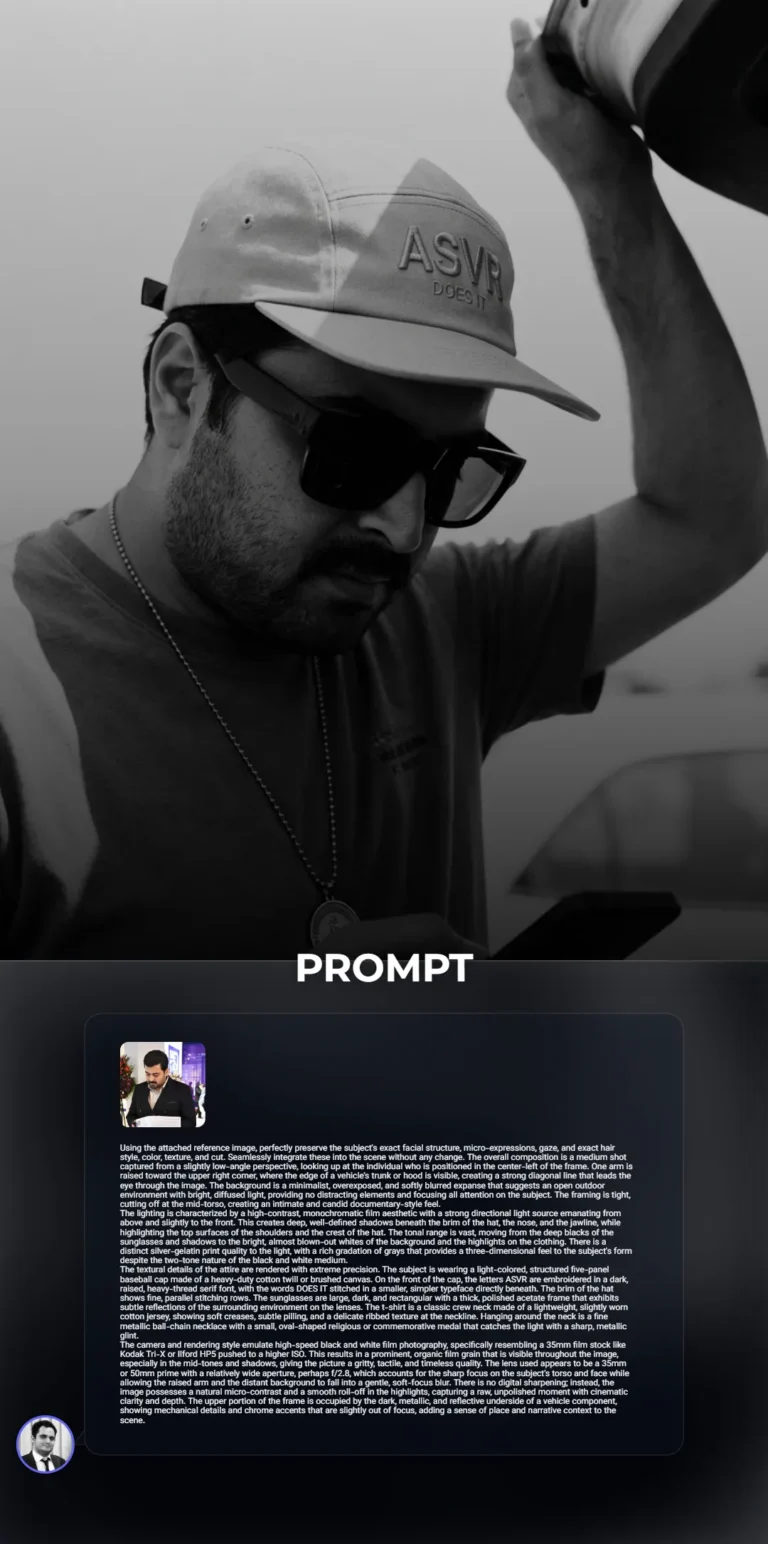
Cinematic B&W Documentary Portrait with ASVR Branding and Film GrainUsing the attached reference image, perfectly preserve the subject's exact facial structure, micro-expressions, gaze, and exact hair style, color, texture, and cut. Seamlessly integrate these into the scene without any change. The overall composition is a medium shot captured from a slightly low-angle perspective, looking up at the individual who is positioned in the center-left of the frame. One arm is raised toward the upper right corner, where the edge of a vehicle's trunk or hood is visible, creating a strong diagonal line that leads the eye through the image. The background is a minimalist, overexposed, and softly blurred expanse that suggests an open outdoor environment with bright, diffused light, providing no distracting elements and focusing all attention on the subject. The framing is tight, cutting off at the mid-torso, creating an intimate and candid documentary-style feel.
The lighting is characterized by a high-contrast, monochromatic film aesthetic with a strong directional light source emanating from above and slightly to the front. This creates deep, well-defined shadows beneath the brim of the hat, the nose, and the jawline, while highlighting the top surfaces of the shoulders and the crest of the hat. The tonal range is vast, moving from the deep blacks of the sunglasses and shadows to the bright, almost blown-out whites of the background and the highlights on the clothing. There is a distinct silver-gelatin print quality to the light, with a rich gradation of grays that provides a three-dimensional feel to the subject's form despite the two-tone nature of the black and white medium.
The textural details of the attire are rendered with extreme precision. The subject is wearing a light-colored, structured five-panel baseball cap made of a heavy-duty cotton twill or brushed canvas. On the front of the cap, the letters ASVR are embroidered in a dark, raised, heavy-thread serif font, with the words DOES IT stitched in a smaller, simpler typeface directly beneath. The brim of the hat shows fine, parallel stitching rows. The sunglasses are large, dark, and rectangular with a thick, polished acetate frame that exhibits subtle reflections of the surrounding environment on the lenses. The t-shirt is a classic crew neck made of a lightweight, slightly worn cotton jersey, showing soft creases, subtle pilling, and a delicate ribbed texture at the neckline. Hanging around the neck is a fine metallic ball-chain necklace with a small, oval-shaped religious or commemorative medal that catches the light with a sharp, metallic glint.
The camera and rendering style emulate high-speed black and white film photography, specifically resembling a 35mm film stock like Kodak Tri-X or Ilford HP5 pushed to a higher ISO. This results in a prominent, organic film grain that is visible throughout the image, especially in the mid-tones and shadows, giving the picture a gritty, tactile, and timeless quality. The lens used appears to be a 35mm or 50mm prime with a relatively wide aperture, perhaps f/2.8, which accounts for the sharp focus on the subject's torso and face while allowing the raised arm and the distant background to fall into a gentle, soft-focus blur. There is no digital sharpening; instead, the image possesses a natural micro-contrast and a smooth roll-off in the highlights, capturing a raw, unpolished moment with cinematic clarity and depth. The upper portion of the frame is occupied by the dark, metallic, and reflective underside of a vehicle component, showing mechanical details and chrome accents that are slightly out of focus, adding a sense of place and narrative context to the scene.

Cinematic Monochromatic Portrait: High-Contrast 85mm Professional Studio ShotUsing the attached reference image, perfectly preserve the subject's exact facial structure, micro-expressions, gaze, and exact hair style, color, texture, and cut. Seamlessly integrate these into the scene without any change.
The photographic composition is a tight, vertical portrait with a 9:16 aspect ratio, captured using a professional-grade 85mm prime lens to achieve a classic telephoto compression that flattens the features aesthetically while maintaining a deep sense of intimacy. The camera is positioned at a slight downward angle, looking into the subject who is leaning forward with arms crossed and resting on an invisible surface in the foreground. The depth of field is meticulously controlled at an aperture of f/2.8, ensuring the focal plane is razor-sharp across the bridge of the nose and the frontmost hand, while the background and the rear of the subject's head fall into a smooth, creamy bokeh. The image is rendered entirely in a rich, high-contrast monochromatic palette, evoking the timeless quality of traditional silver halide film. The tonal range is expansive, featuring deep, obsidian blacks in the shadows and crisp, bright whites in the highlights, with a sophisticated spectrum of charcoal, slate, and pewter grays defining the midtones. A fine, subtle film grain is present throughout the frame, mimicking an ISO 400 aesthetic to add tactile grit and a cinematic atmosphere.
The lighting is a masterclass in low-key, dramatic chiaroscuro, utilizing a single, large softbox positioned overhead and slightly to the front to create a top-down light fall-off. This positioning casts intentional, deep shadows under the brow and the nose, emphasizing the three-dimensional geometry of the subject’s form. The light catches the top of the subject's frame and the folded arms, creating high-frequency highlights on the texture of the clothing. The background is a seamless, dark studio backdrop that exhibits a very subtle radial gradient, being slightly lighter directly behind the subject's head to provide separation and depth before fading into total darkness at the edges of the frame.
The subject is adorned with specific accessories and attire that are central to the image's texture. Resting on the bridge of the nose are a pair of vintage-inspired, perfectly circular sunglasses with very thin, metallic wire frames and dark, non-reflective matte lenses that obscure the eyes while reflecting the soft, diffused light of the studio. On the right ring finger, which is prominent in the foreground, is a wide, heavy band ring made of antiqued silver or pewter. This ring features an intricate, deeply embossed Celtic or tribal scrollwork pattern that covers the entire circumference, with the dark oxidation in the recessed areas of the carving providing high visual contrast against the polished raised surfaces.
The individual wears a heavy-gauge, knitted turtleneck sweater with a distinct ribbed texture. The knit pattern is dense and tactile, showing individual loops of yarn and a vertical ribbing that is particularly visible at the cuffs of the sleeves. The fabric appears to be a thick wool or cashmere blend, with the light highlighting the soft fuzz of the fibers and the complex weave of the textile. The arms are folded one over the other, with the skin on the back of the hands showing fine pores, subtle veins, and very fine, short hair, all rendered with hyper-realistic clarity. The overall mood is one of intense focus and quiet confidence, captured in a moment of stillness that feels both modern and classic.
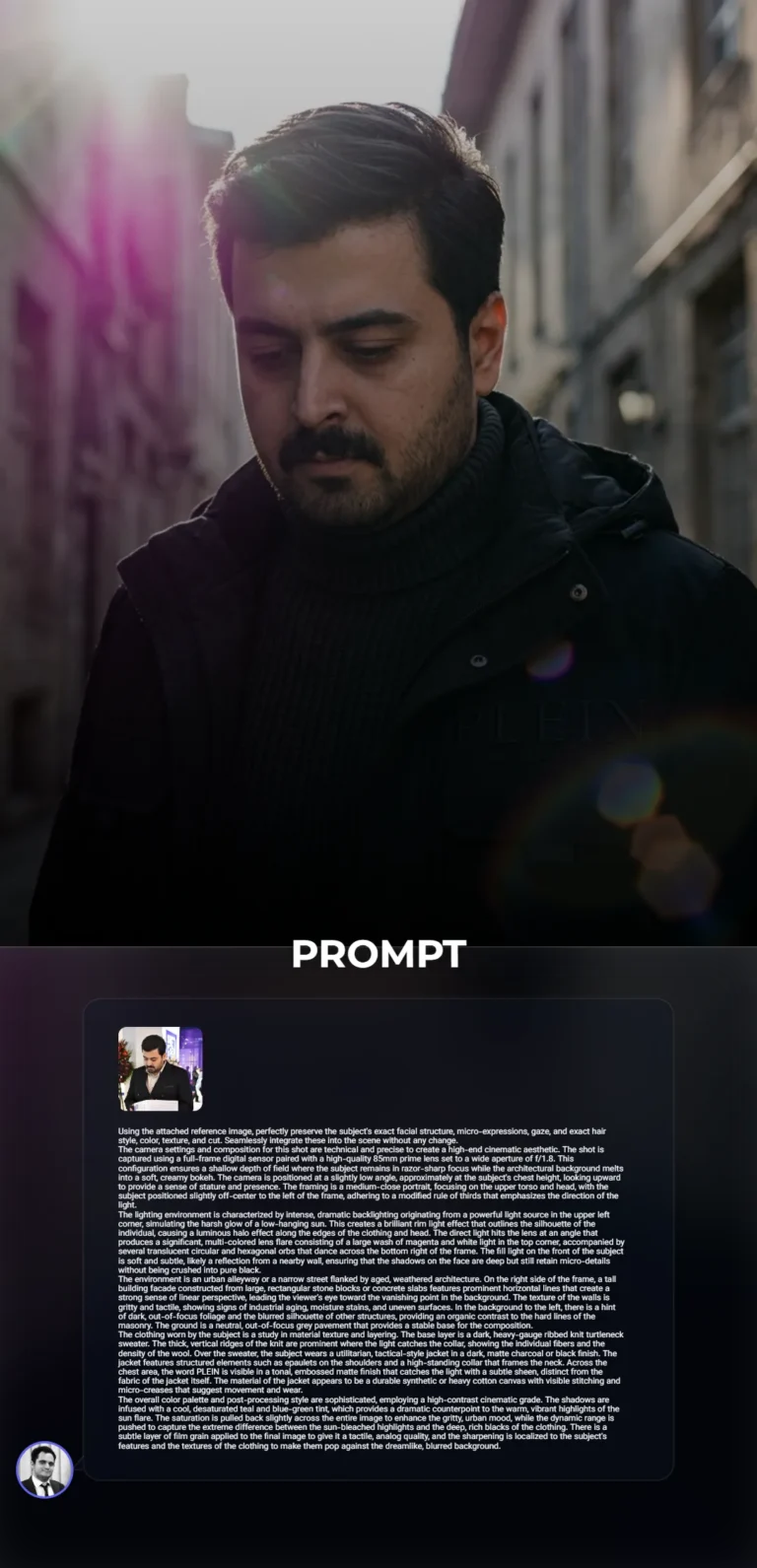
Cinematic Urban Portrait with Dramatic Backlight and Lens FlareUsing the attached reference image, perfectly preserve the subject's exact facial structure, micro-expressions, gaze, and exact hair style, color, texture, and cut. Seamlessly integrate these into the scene without any change.
The camera settings and composition for this shot are technical and precise to create a high-end cinematic aesthetic. The shot is captured using a full-frame digital sensor paired with a high-quality 85mm prime lens set to a wide aperture of f/1.8. This configuration ensures a shallow depth of field where the subject remains in razor-sharp focus while the architectural background melts into a soft, creamy bokeh. The camera is positioned at a slightly low angle, approximately at the subject's chest height, looking upward to provide a sense of stature and presence. The framing is a medium-close portrait, focusing on the upper torso and head, with the subject positioned slightly off-center to the left of the frame, adhering to a modified rule of thirds that emphasizes the direction of the light.
The lighting environment is characterized by intense, dramatic backlighting originating from a powerful light source in the upper left corner, simulating the harsh glow of a low-hanging sun. This creates a brilliant rim light effect that outlines the silhouette of the individual, causing a luminous halo effect along the edges of the clothing and head. The direct light hits the lens at an angle that produces a significant, multi-colored lens flare consisting of a large wash of magenta and white light in the top corner, accompanied by several translucent circular and hexagonal orbs that dance across the bottom right of the frame. The fill light on the front of the subject is soft and subtle, likely a reflection from a nearby wall, ensuring that the shadows on the face are deep but still retain micro-details without being crushed into pure black.
The environment is an urban alleyway or a narrow street flanked by aged, weathered architecture. On the right side of the frame, a tall building facade constructed from large, rectangular stone blocks or concrete slabs features prominent horizontal lines that create a strong sense of linear perspective, leading the viewer's eye toward the vanishing point in the background. The texture of the walls is gritty and tactile, showing signs of industrial aging, moisture stains, and uneven surfaces. In the background to the left, there is a hint of dark, out-of-focus foliage and the blurred silhouette of other structures, providing an organic contrast to the hard lines of the masonry. The ground is a neutral, out-of-focus grey pavement that provides a stable base for the composition.
The clothing worn by the subject is a study in material texture and layering. The base layer is a dark, heavy-gauge ribbed knit turtleneck sweater. The thick, vertical ridges of the knit are prominent where the light catches the collar, showing the individual fibers and the density of the wool. Over the sweater, the subject wears a utilitarian, tactical-style jacket in a dark, matte charcoal or black finish. The jacket features structured elements such as epaulets on the shoulders and a high-standing collar that frames the neck. Across the chest area, the word PLEIN is visible in a tonal, embossed matte finish that catches the light with a subtle sheen, distinct from the fabric of the jacket itself. The material of the jacket appears to be a durable synthetic or heavy cotton canvas with visible stitching and micro-creases that suggest movement and wear.
The overall color palette and post-processing style are sophisticated, employing a high-contrast cinematic grade. The shadows are infused with a cool, desaturated teal and blue-green tint, which provides a dramatic counterpoint to the warm, vibrant highlights of the sun flare. The saturation is pulled back slightly across the entire image to enhance the gritty, urban mood, while the dynamic range is pushed to capture the extreme difference between the sun-bleached highlights and the deep, rich blacks of the clothing. There is a subtle layer of film grain applied to the final image to give it a tactile, analog quality, and the sharpening is localized to the subject's features and the textures of the clothing to make them pop against the dreamlike, blurred background.
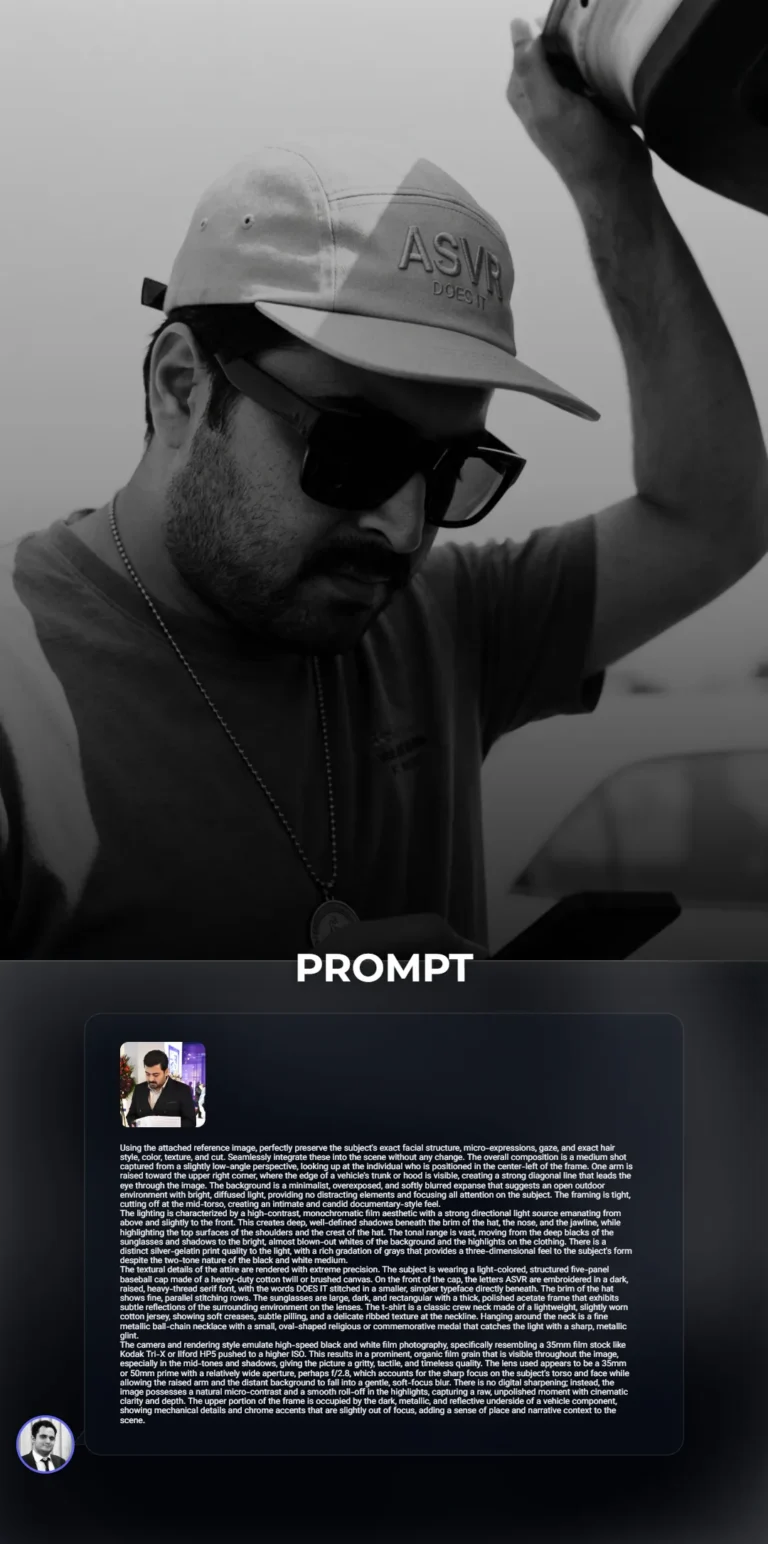
Cinematic B&W Documentary Portrait with ASVR Branding and Film GrainUsing the attached reference image, perfectly preserve the subject's exact facial structure, micro-expressions, gaze, and exact hair style, color, texture, and cut. Seamlessly integrate these into the scene without any change. The overall composition is a medium shot captured from a slightly low-angle perspective, looking up at the individual who is positioned in the center-left of the frame. One arm is raised toward the upper right corner, where the edge of a vehicle's trunk or hood is visible, creating a strong diagonal line that leads the eye through the image. The background is a minimalist, overexposed, and softly blurred expanse that suggests an open outdoor environment with bright, diffused light, providing no distracting elements and focusing all attention on the subject. The framing is tight, cutting off at the mid-torso, creating an intimate and candid documentary-style feel.
The lighting is characterized by a high-contrast, monochromatic film aesthetic with a strong directional light source emanating from above and slightly to the front. This creates deep, well-defined shadows beneath the brim of the hat, the nose, and the jawline, while highlighting the top surfaces of the shoulders and the crest of the hat. The tonal range is vast, moving from the deep blacks of the sunglasses and shadows to the bright, almost blown-out whites of the background and the highlights on the clothing. There is a distinct silver-gelatin print quality to the light, with a rich gradation of grays that provides a three-dimensional feel to the subject's form despite the two-tone nature of the black and white medium.
The textural details of the attire are rendered with extreme precision. The subject is wearing a light-colored, structured five-panel baseball cap made of a heavy-duty cotton twill or brushed canvas. On the front of the cap, the letters ASVR are embroidered in a dark, raised, heavy-thread serif font, with the words DOES IT stitched in a smaller, simpler typeface directly beneath. The brim of the hat shows fine, parallel stitching rows. The sunglasses are large, dark, and rectangular with a thick, polished acetate frame that exhibits subtle reflections of the surrounding environment on the lenses. The t-shirt is a classic crew neck made of a lightweight, slightly worn cotton jersey, showing soft creases, subtle pilling, and a delicate ribbed texture at the neckline. Hanging around the neck is a fine metallic ball-chain necklace with a small, oval-shaped religious or commemorative medal that catches the light with a sharp, metallic glint.
The camera and rendering style emulate high-speed black and white film photography, specifically resembling a 35mm film stock like Kodak Tri-X or Ilford HP5 pushed to a higher ISO. This results in a prominent, organic film grain that is visible throughout the image, especially in the mid-tones and shadows, giving the picture a gritty, tactile, and timeless quality. The lens used appears to be a 35mm or 50mm prime with a relatively wide aperture, perhaps f/2.8, which accounts for the sharp focus on the subject's torso and face while allowing the raised arm and the distant background to fall into a gentle, soft-focus blur. There is no digital sharpening; instead, the image possesses a natural micro-contrast and a smooth roll-off in the highlights, capturing a raw, unpolished moment with cinematic clarity and depth. The upper portion of the frame is occupied by the dark, metallic, and reflective underside of a vehicle component, showing mechanical details and chrome accents that are slightly out of focus, adding a sense of place and narrative context to the scene.
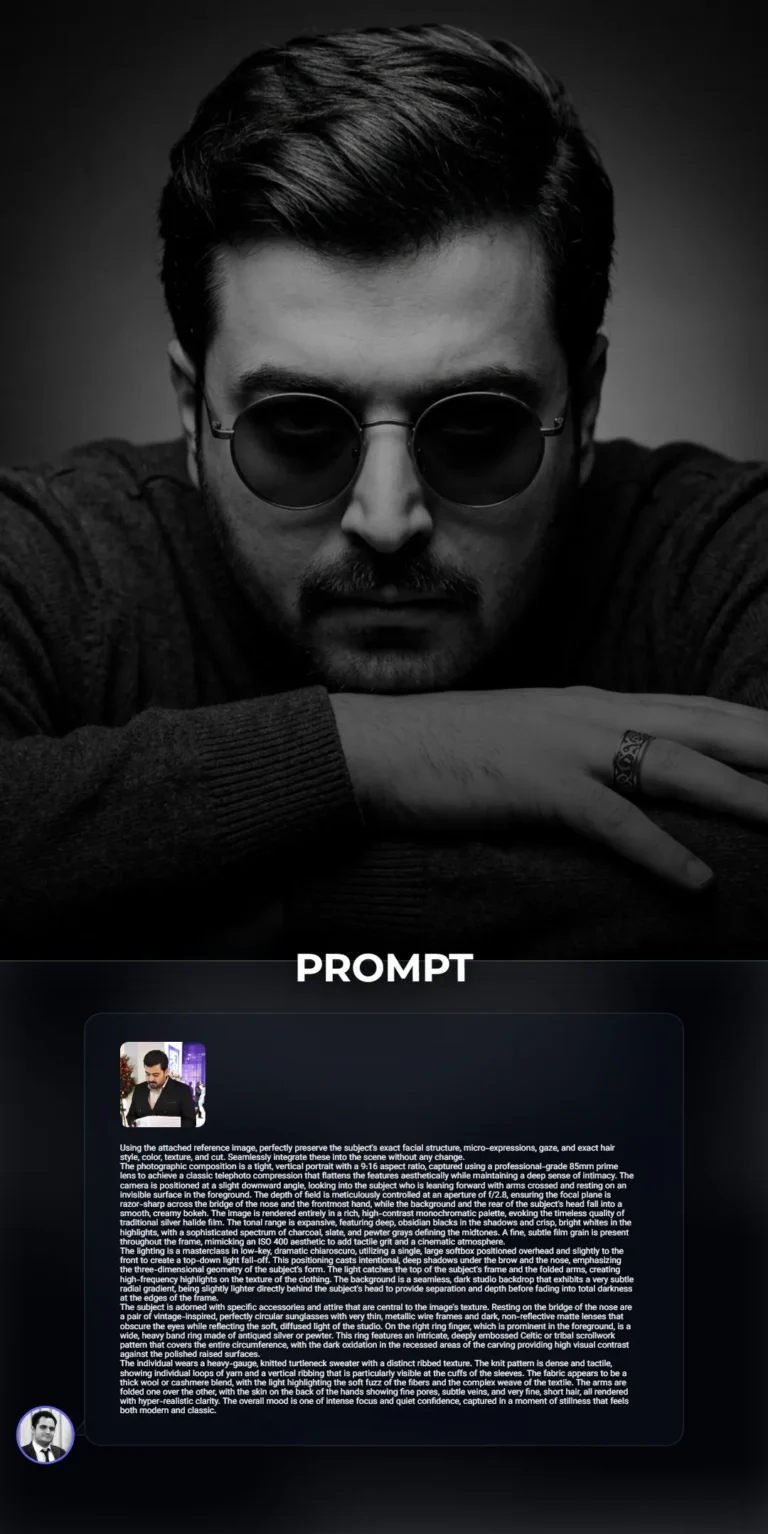
Cinematic Monochromatic Portrait: High-Contrast 85mm Professional Studio ShotUsing the attached reference image, perfectly preserve the subject's exact facial structure, micro-expressions, gaze, and exact hair style, color, texture, and cut. Seamlessly integrate these into the scene without any change.
The photographic composition is a tight, vertical portrait with a 9:16 aspect ratio, captured using a professional-grade 85mm prime lens to achieve a classic telephoto compression that flattens the features aesthetically while maintaining a deep sense of intimacy. The camera is positioned at a slight downward angle, looking into the subject who is leaning forward with arms crossed and resting on an invisible surface in the foreground. The depth of field is meticulously controlled at an aperture of f/2.8, ensuring the focal plane is razor-sharp across the bridge of the nose and the frontmost hand, while the background and the rear of the subject's head fall into a smooth, creamy bokeh. The image is rendered entirely in a rich, high-contrast monochromatic palette, evoking the timeless quality of traditional silver halide film. The tonal range is expansive, featuring deep, obsidian blacks in the shadows and crisp, bright whites in the highlights, with a sophisticated spectrum of charcoal, slate, and pewter grays defining the midtones. A fine, subtle film grain is present throughout the frame, mimicking an ISO 400 aesthetic to add tactile grit and a cinematic atmosphere.
The lighting is a masterclass in low-key, dramatic chiaroscuro, utilizing a single, large softbox positioned overhead and slightly to the front to create a top-down light fall-off. This positioning casts intentional, deep shadows under the brow and the nose, emphasizing the three-dimensional geometry of the subject’s form. The light catches the top of the subject's frame and the folded arms, creating high-frequency highlights on the texture of the clothing. The background is a seamless, dark studio backdrop that exhibits a very subtle radial gradient, being slightly lighter directly behind the subject's head to provide separation and depth before fading into total darkness at the edges of the frame.
The subject is adorned with specific accessories and attire that are central to the image's texture. Resting on the bridge of the nose are a pair of vintage-inspired, perfectly circular sunglasses with very thin, metallic wire frames and dark, non-reflective matte lenses that obscure the eyes while reflecting the soft, diffused light of the studio. On the right ring finger, which is prominent in the foreground, is a wide, heavy band ring made of antiqued silver or pewter. This ring features an intricate, deeply embossed Celtic or tribal scrollwork pattern that covers the entire circumference, with the dark oxidation in the recessed areas of the carving providing high visual contrast against the polished raised surfaces.
The individual wears a heavy-gauge, knitted turtleneck sweater with a distinct ribbed texture. The knit pattern is dense and tactile, showing individual loops of yarn and a vertical ribbing that is particularly visible at the cuffs of the sleeves. The fabric appears to be a thick wool or cashmere blend, with the light highlighting the soft fuzz of the fibers and the complex weave of the textile. The arms are folded one over the other, with the skin on the back of the hands showing fine pores, subtle veins, and very fine, short hair, all rendered with hyper-realistic clarity. The overall mood is one of intense focus and quiet confidence, captured in a moment of stillness that feels both modern and classic.
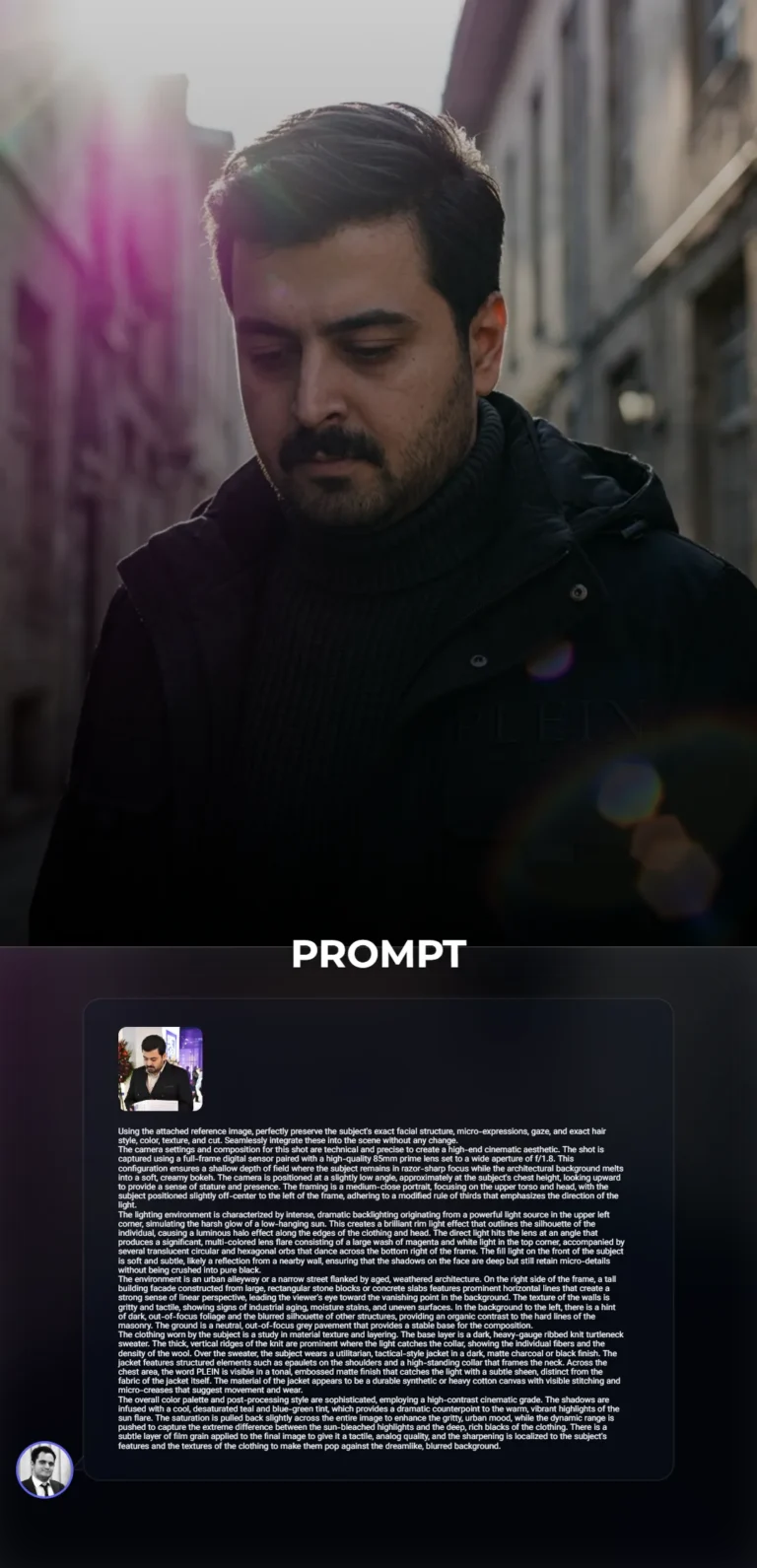
Cinematic Urban Portrait with Dramatic Backlight and Lens FlareUsing the attached reference image, perfectly preserve the subject's exact facial structure, micro-expressions, gaze, and exact hair style, color, texture, and cut. Seamlessly integrate these into the scene without any change.
The camera settings and composition for this shot are technical and precise to create a high-end cinematic aesthetic. The shot is captured using a full-frame digital sensor paired with a high-quality 85mm prime lens set to a wide aperture of f/1.8. This configuration ensures a shallow depth of field where the subject remains in razor-sharp focus while the architectural background melts into a soft, creamy bokeh. The camera is positioned at a slightly low angle, approximately at the subject's chest height, looking upward to provide a sense of stature and presence. The framing is a medium-close portrait, focusing on the upper torso and head, with the subject positioned slightly off-center to the left of the frame, adhering to a modified rule of thirds that emphasizes the direction of the light.
The lighting environment is characterized by intense, dramatic backlighting originating from a powerful light source in the upper left corner, simulating the harsh glow of a low-hanging sun. This creates a brilliant rim light effect that outlines the silhouette of the individual, causing a luminous halo effect along the edges of the clothing and head. The direct light hits the lens at an angle that produces a significant, multi-colored lens flare consisting of a large wash of magenta and white light in the top corner, accompanied by several translucent circular and hexagonal orbs that dance across the bottom right of the frame. The fill light on the front of the subject is soft and subtle, likely a reflection from a nearby wall, ensuring that the shadows on the face are deep but still retain micro-details without being crushed into pure black.
The environment is an urban alleyway or a narrow street flanked by aged, weathered architecture. On the right side of the frame, a tall building facade constructed from large, rectangular stone blocks or concrete slabs features prominent horizontal lines that create a strong sense of linear perspective, leading the viewer's eye toward the vanishing point in the background. The texture of the walls is gritty and tactile, showing signs of industrial aging, moisture stains, and uneven surfaces. In the background to the left, there is a hint of dark, out-of-focus foliage and the blurred silhouette of other structures, providing an organic contrast to the hard lines of the masonry. The ground is a neutral, out-of-focus grey pavement that provides a stable base for the composition.
The clothing worn by the subject is a study in material texture and layering. The base layer is a dark, heavy-gauge ribbed knit turtleneck sweater. The thick, vertical ridges of the knit are prominent where the light catches the collar, showing the individual fibers and the density of the wool. Over the sweater, the subject wears a utilitarian, tactical-style jacket in a dark, matte charcoal or black finish. The jacket features structured elements such as epaulets on the shoulders and a high-standing collar that frames the neck. Across the chest area, the word PLEIN is visible in a tonal, embossed matte finish that catches the light with a subtle sheen, distinct from the fabric of the jacket itself. The material of the jacket appears to be a durable synthetic or heavy cotton canvas with visible stitching and micro-creases that suggest movement and wear.
The overall color palette and post-processing style are sophisticated, employing a high-contrast cinematic grade. The shadows are infused with a cool, desaturated teal and blue-green tint, which provides a dramatic counterpoint to the warm, vibrant highlights of the sun flare. The saturation is pulled back slightly across the entire image to enhance the gritty, urban mood, while the dynamic range is pushed to capture the extreme difference between the sun-bleached highlights and the deep, rich blacks of the clothing. There is a subtle layer of film grain applied to the final image to give it a tactile, analog quality, and the sharpening is localized to the subject's features and the textures of the clothing to make them pop against the dreamlike, blurred background.